

Product visuals have become the deciding factor for online shoppers, especially in the competitive tech accessories market. Staying ahead means adapting to rapid changes driven by cutting-edge technology and shifting consumer expectations. In 2026, mockup trends will center on interactive digital visualization, AI-powered personalization, and hyper-realistic 3D renderings, giving brands new ways to showcase value and build trust instantly. This article breaks down the latest approaches empowering e-commerce entrepreneurs to create immersive, conversion-focused product presentations.
Table of Contents
- Defining Mockup Trends For 2026
- Emerging Mockup Formats And Styles
- AI Personalization In Mockup Design
- Social Media And Marketplace Integration
- Avoiding Common Pitfalls In Mockup Creation
Key Takeaways
| Point | Details |
|---|---|
| Future of Mockups | Mockup design is shifting towards dynamic, interactive formats that enhance consumer engagement and storytelling. |
| AI Personalization | AI is enabling highly personalized mockup experiences by adapting visual elements to individual user preferences. |
| Integration with Social Media | Brands are leveraging social media for seamless product visualization to drive direct purchases and enhance user interaction. |
| Avoiding Design Pitfalls | Effective mockup creation requires a flexible approach, focusing on iteration and continuous improvement rather than perfection. |
Defining Mockup Trends for 2026
The e-commerce visual landscape is rapidly transforming, driven by technological innovations and changing consumer expectations. In 2026, mockup design will move beyond static images into dynamic, interactive representations that tell compelling product stories. Interactive digital visualization will become the new standard for online product presentations.
Key mockup trends emerging for 2026 include:
- Hyper-realistic 3D renderings with unprecedented detail and texture accuracy
- AI-generated customization allowing instant product personalization
- Animated product demonstrations showing real-world functionality
- Immersive augmented reality mockups enabling virtual product interactions
These trends reflect a broader shift toward more engaging, informative digital product experiences. Brands are recognizing that visual storytelling goes far beyond traditional product photography. Modern mockups must communicate product value, quality, and unique characteristics within seconds of viewer engagement.
Here’s a quick overview of how advanced mockup technologies impact e-commerce outcomes in 2026:
| Mockup Technology | Customer Benefit | Brand Advantage |
|---|---|---|
| Realistic 3D Rendering | Enhanced product trust | Increased conversion rates |
| AI-driven Customization | Personalized experiences | Greater customer loyalty |
| Augmented Reality Mockups | Virtual try-before-you-buy | Reduced return rates |
| Animated Demonstrations | Clear feature communication | Fewer product misinterpretations |
Technology is driving unprecedented precision in mockup creation. Advanced 3D rendering engines now generate product visuals so realistic that they are virtually indistinguishable from actual photographs. Machine learning algorithms can now analyze thousands of product images to generate optimal lighting, shadows, and contextual placements that make digital representations feel authentic and trustworthy.
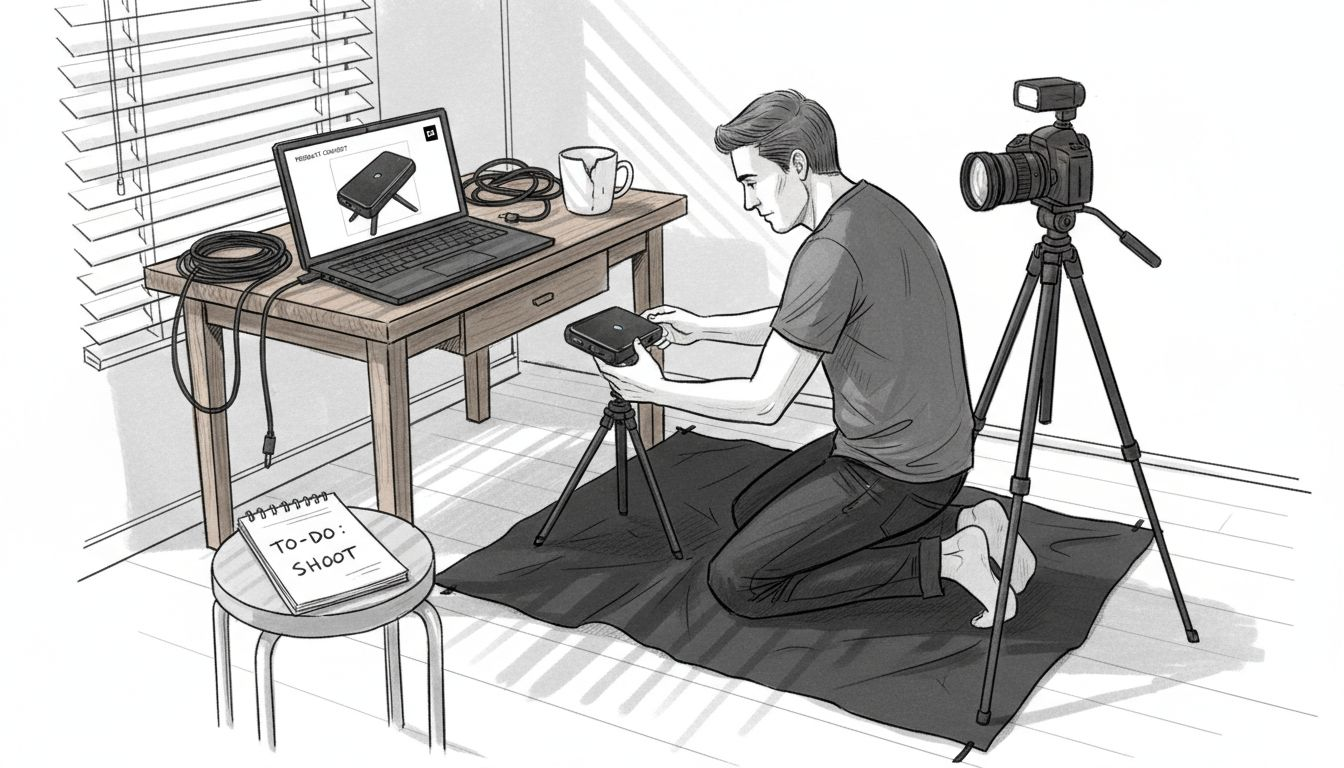
Pro tip: Invest in mockup technologies that offer multiple viewing angles and interactive features to maximize customer engagement and build product confidence.
Emerging Mockup Formats and Styles
The landscape of product visualization is undergoing a dramatic transformation, driven by advanced technological capabilities that reimagine how brands present digital products. AI-supported mockup refinement is emerging as a critical strategy for creating more intelligent, context-aware visual representations.
Key emerging mockup formats in 2026 will include:
- Contextual AI-generated environments that dynamically place products in realistic settings
- Interactive 360-degree product experiences allowing complete digital exploration
- Multi-sensory digital mockups incorporating simulated texture and movement
- Personalized mockup generation adapting visuals to individual user preferences
These innovations represent more than aesthetic improvements. They fundamentally transform how consumers interact with digital products, bridging the gap between online browsing and physical product experience. Advanced mockup technologies now enable potential buyers to understand product nuances with unprecedented clarity and engagement.
Technology is enabling mockups to become living, responsive representations. Machine learning algorithms can now analyze thousands of product images, generating contextually intelligent visualizations that adapt to different platforms, user demographics, and marketing contexts. This represents a quantum leap from traditional static product imagery.
Pro tip: Invest in mockup technologies that offer dynamic, AI-driven visualization capabilities to create more immersive and personalized product experiences.
AI Personalization in Mockup Design
The future of digital product visualization hinges on intelligent personalization, where AI transforms static mockups into dynamic, adaptive experiences. AI-driven design personalization is revolutionizing how brands create visual representations that resonate with individual user preferences and expectations.
Key aspects of AI personalization in mockup design include:
- Contextual user profiling that adapts visual elements based on demographic data
- Real-time aesthetic optimization matching design to individual user preferences
- Emotional response tracking to refine visual representations dynamically
- Predictive design recommendations generated through machine learning algorithms
These AI-powered techniques go beyond traditional one-size-fits-all product presentations. By analyzing user interaction patterns, behavioral data, and individual aesthetic preferences, mockup technologies can now generate highly targeted visual experiences that feel uniquely crafted for each potential customer.
Use this summary to distinguish the personalization techniques enabled by AI in mockup design:
| Technique | Description | Effect on Engagement |
|---|---|---|
| Contextual Profiling | Adjusts visuals using user data | Higher relevance and attention |
| Real-time Optimization | Tailors design as preferences change | Elevated user satisfaction |
| Emotional Tracking | Adapts based on user emotions | Deeper emotional connection |
| Predictive Recommendations | Suggests designs proactively | Faster decision and purchase |
Advanced machine learning models are breaking new ground in understanding visual communication. They can now interpret subtle design nuances, predict user engagement, and automatically generate mockups that speak directly to specific audience segments. This represents a fundamental shift from generic product imagery to intelligent, responsive visual storytelling.
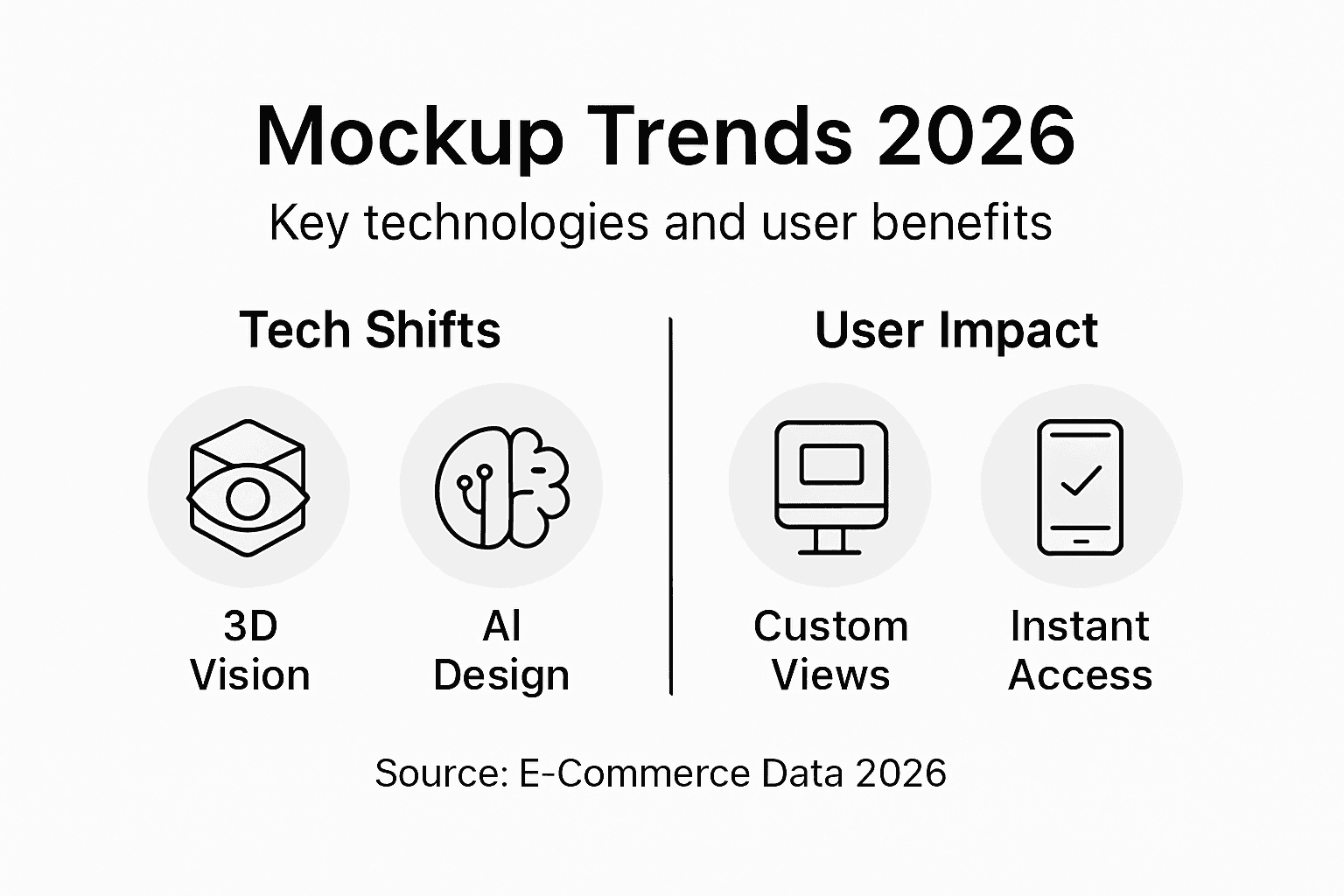
Pro tip: Leverage AI-powered mockup tools that offer granular personalization capabilities to create more engaging and conversion-oriented product visualizations.
Social Media and Marketplace Integration
The convergence of social media and e-commerce is creating unprecedented opportunities for product visualization and consumer engagement. Social commerce design strategies are transforming how brands present products across digital platforms, making mockups critical to capturing audience attention and driving direct purchases.
Key integration strategies for 2026 include:
- Seamless platform-specific mockup designs tailored to each social media interface
- Shoppable post visualizations enabling instant product purchasing
- Dynamic product tag integration with real-time inventory tracking
- Interactive social media mockup experiences that simulate product interactions
These integration techniques represent a significant shift from traditional marketing approaches. By embedding mockups directly into social media feeds and marketplace interfaces, brands can create immersive shopping experiences that feel natural and intuitive to digital-first consumers.
Advanced mockup technologies are breaking down barriers between content consumption and shopping. Machine learning algorithms now enable brands to generate platform-optimized visuals that adapt dynamically to user preferences, device specifications, and social media design guidelines. This represents a fundamental reimagining of how products are presented and purchased in digital environments.
Pro tip: Create platform-specific mockup variations that match each social media channel’s unique visual language and user experience.
Avoiding Common Pitfalls in Mockup Creation
Creating effective product mockups requires strategic thinking and careful execution. Common prototyping design challenges can derail even the most well-intentioned design processes, making awareness and proactive management critical for success.
Potential pitfalls to avoid in mockup creation include:
- Rushing to the first design concept without thorough exploration
- Becoming overly attached to initial mockup iterations
- Spending excessive time on unnecessary technical explanations
- Failing to establish a clear design purpose
- Getting discouraged by initial design failures
- Underestimating the iterative design process
Successful mockup creation is less about achieving perfection in the first attempt and more about developing a flexible, adaptive approach. Designers must cultivate a mindset that views each iteration as a learning opportunity, not a definitive endpoint. This approach allows for continuous refinement and improvement of visual representations.
Technology has transformed mockup creation, offering unprecedented tools for precision and creativity. Advanced design platforms now provide intelligent suggestions, real-time collaboration features, and AI-driven optimization that can help designers navigate potential pitfalls more effectively. By leveraging these technologies, brands can create more compelling and accurate product visualizations.
Pro tip: Treat each mockup iteration as a strategic experiment, focusing on learning and improvement rather than achieving instant perfection.
Elevate Your Product Presentations with Cutting-Edge Mockups for 2026
Navigating the evolving landscape of mockup trends can be challenging, especially when personalized, interactive, and hyper-realistic visuals become essential to boost e-commerce sales. This article highlights how AI-driven customization, animated demonstrations, and immersive 3D renderings are reshaping consumer expectations. If your goal is to engage potential buyers quickly and build trust, leveraging professional mockups tailored for modern digital platforms is crucial. Enhance your online store with photorealistic designs that clearly communicate product value and create emotional connections.
Discover our iPhone 2D Case Mockups - Samsung 2D Case Mockups – Bettermockups collection designed to reflect the sophistication of 2026 trends. Dive into interactive visuals with our Video mockups (Video templates) for Phone Case business. – Bettermockups that bring your products to life across social media and marketplaces. Don’t let outdated imagery hold you back. Visit Bettermockups now to secure premium-quality, customizable mockup templates that transform your digital presence and accelerate your sales growth.
Frequently Asked Questions
What are the key mockup trends for e-commerce in 2026?
The key mockup trends for e-commerce in 2026 include hyper-realistic 3D renderings, AI-generated customization, animated product demonstrations, and immersive augmented reality mockups. These advancements focus on enhancing visual storytelling and user engagement.
How does AI influence mockup design personalization in 2026?
AI influences mockup design personalization by utilizing contextual user profiling, real-time aesthetic optimization, emotional response tracking, and predictive design recommendations, creating targeted visual experiences that resonate with individual user preferences.
What are the benefits of using augmented reality in product mockups?
Augmented reality in product mockups allows consumers to interact with products virtually, facilitating a try-before-you-buy experience. This leads to increased engagement, better understanding of product features, and reduced return rates.
How can brands avoid common pitfalls in mockup creation?
To avoid common pitfalls, brands should not rush the design process, remain flexible and open to iterations, clearly establish design objectives, and treat each mockup iteration as a learning opportunity rather than seeking immediate perfection.


