

Finding ways to make your tech accessories stand out in crowded online marketplaces can feel overwhelming. Clear, professional visuals are now a must for sellers aiming to grab attention and earn trust. By focusing on creating high-quality mockups that highlight every detail and unique feature, you can transform generic listings into compelling showcases. This article explains how realistic product mockups help entrepreneurs display their offerings, improve marketing materials, and connect with buyers more effectively.
Table of Contents
- Defining Product Mockups For Digital Sellers
- Primary Types And Real-World Use Cases
- Key Features Of High-Quality Mockups
- Advantages For Tech Accessory Entrepreneurs
- Mistakes To Avoid When Using Mockups
Key Takeaways
| Point | Details |
|---|---|
| Importance of Mockups | Product mockups help digital sellers effectively visualize designs, reducing development costs and enhancing stakeholder feedback. |
| Types of Mockups | Utilize static, interactive, and animated mockups to cater to different marketing needs and audience engagement. |
| High-Quality Standards | Focus on photorealistic rendering, accurate proportions, and consistent design for effective product representation. |
| Common Mistakes | Avoid low-quality images, unrealistic colors, and inconsistent styles to maintain professionalism and foster customer trust. |
Defining Product Mockups for Digital Sellers
Product mockups are powerful visual representations that help digital sellers transform abstract design concepts into realistic product previews. They serve as critical communication tools that bridge imagination and actual product presentation, enabling entrepreneurs to showcase their offerings with professional precision.
Digital mockups are static visual representations that capture a product’s core aesthetic and design elements. Digital product design mockups provide a comprehensive snapshot of how a final product will appear, focusing on critical aspects like layout, color scheme, typography, and overall visual presentation.
For digital sellers, mockups offer several crucial advantages:
- Visualize product design before production
- Reduce development and design costs
- Facilitate early stakeholder feedback
- Create professional marketing materials
- Test design concepts quickly and efficiently
Mockups differ significantly from basic wireframes or rough sketches. While wireframes outline basic structural layouts, mockups integrate detailed visual elements that closely represent the final product. They transform abstract concepts into tangible, near-realistic representations that potential customers can genuinely appreciate.
Professional mockup creation involves careful attention to design details, ensuring that every visual element accurately reflects the intended product aesthetic. Digital sellers use mockups across multiple platforms, including social media, online marketplaces, and personal websites, to create compelling product presentations.
Pro tip: Invest time in creating high-quality mockups that showcase your product’s unique features and design nuances.
Primary Types and Real-World Use Cases
Product mockups come in diverse formats, each designed to serve specific communication and design objectives for digital sellers. Digital product mockup variations range from static visual representations to complex interactive and animated designs, offering entrepreneurs powerful tools for product visualization and marketing.
Three primary mockup types dominate digital product presentations:
- Static Mockups: Detailed visual snapshots capturing product design elements
- Interactive Mockups: Simulated user experience environments
- Animated Mockups: Dynamic presentations showcasing product functionality and movement
Static mockups represent the most fundamental representation, providing a comprehensive visual overview of a product’s aesthetic and design characteristics. These mockups are particularly valuable for print materials, social media graphics, and initial design concept presentations.

Interactive mockups elevate product visualization by allowing potential users or stakeholders to simulate basic interactions. Digital designers use these mockups to test user interface flow, validate design choices, and provide a more immersive preview of digital products like websites, mobile applications, and software interfaces.
Animated mockups introduce motion and dynamic elements, creating engaging visual narratives that capture audience attention more effectively than static images. These advanced mockups are especially powerful for showcasing digital products with complex interactions or nuanced design features.
Here’s a comparison of digital mockup types and their best use scenarios:
| Mockup Type | Unique Benefit | Ideal Use Case |
|---|---|---|
| Static Mockup | Fast design validation | Product catalogs, print ads |
| Interactive Mockup | Simulates user navigation | App demos, UI feedback |
| Animated Mockup | Highlights product movement | Social marketing, feature teasers |
Real-world applications span multiple industries:
- E-commerce product listings
- Digital marketing campaigns
- Software development presentations
- User experience design validation
- Brand identity presentations
Pro tip: Select mockup types strategically based on your specific product communication goals and target audience engagement needs.
Key Features of High-Quality Mockups
Creating exceptional digital product mockups requires meticulous attention to visual details and strategic design considerations. High-quality digital product mockups demand a sophisticated approach that goes beyond basic image creation, focusing on realistic representation and precise communication of product characteristics.
Key characteristics of professional mockups include:
- Photorealistic rendering
- Accurate device proportions
- Precise color and typography representation
- Contextual design elements
- Clean, professional presentation
Photorealistic rendering stands as the cornerstone of exceptional mockups. These visual representations must capture intricate details with remarkable precision, mimicking real-world product appearances down to subtle texture and lighting variations. Digital sellers rely on these high-fidelity images to create compelling visual narratives that accurately represent their products.
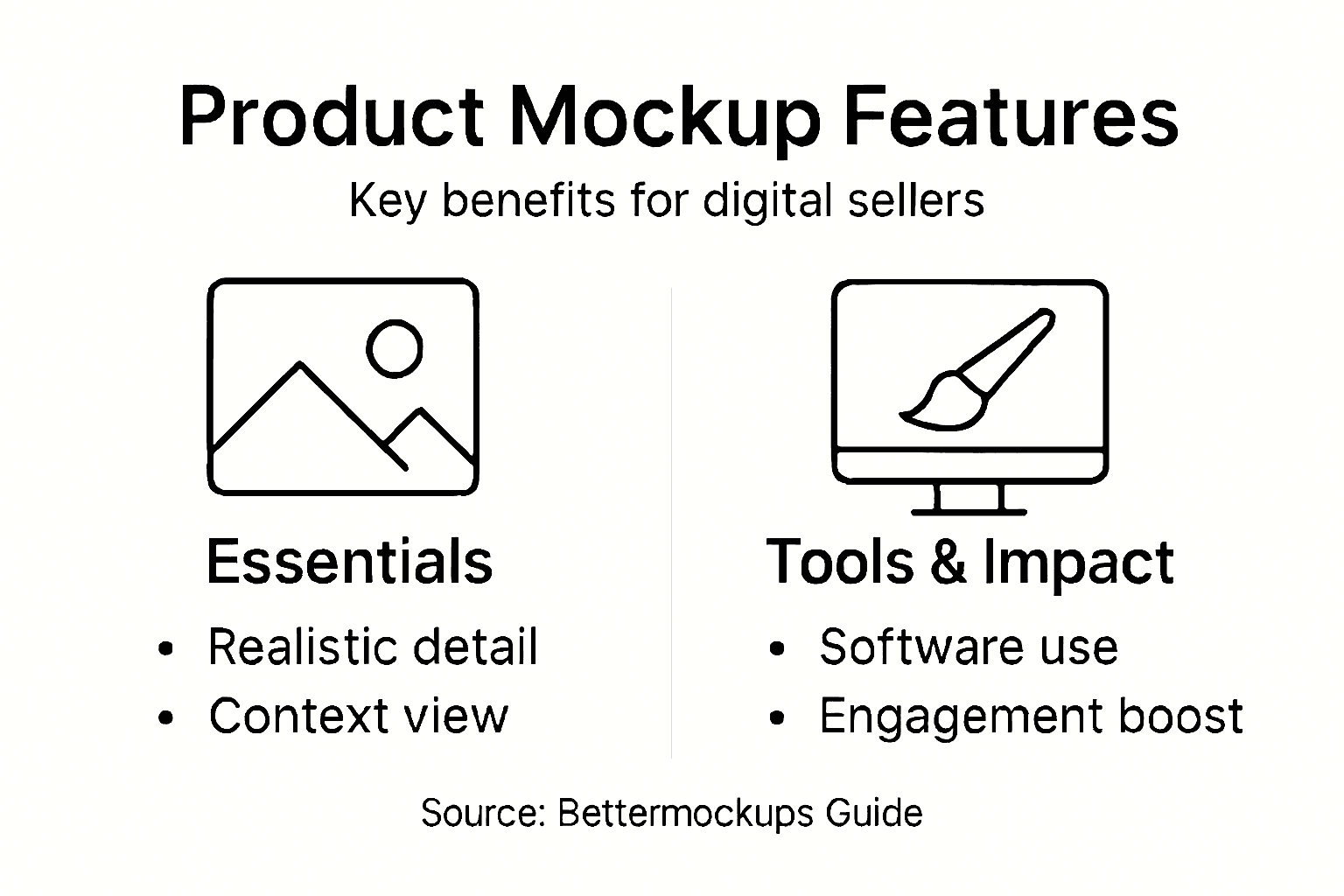
Contextual design plays a crucial role in mockup effectiveness. Professional mockups integrate products into realistic environments, helping potential customers visualize how the item might look and function in actual usage scenarios. This approach transforms static images into powerful marketing tools that communicate product value far more effectively than traditional product descriptions.
Technical considerations are equally important in mockup creation. Designers must carefully select appropriate tools like Adobe Photoshop or Figma, understanding that the right software can dramatically enhance visual quality. Attention to minute details such as pixel-perfect alignment, shadow rendering, and color calibration separates amateur attempts from professional-grade mockups.
Pro tip: Invest in high-quality mockup tools and prioritize realism over complex design elements to create truly compelling product visualizations.
Advantages for Tech Accessory Entrepreneurs
For tech accessory entrepreneurs, product mockups represent a game-changing visual strategy that can dramatically transform marketing and sales potential. Dropshipping tech accessory success hinges on the ability to create compelling, professional product representations that capture potential buyers’ attention and communicate product value instantly.
Key advantages for tech accessory entrepreneurs include:
- Reduced product photography costs
- Enhanced marketing visual quality
- Faster time-to-market
- Simplified design iteration
- Increased customer confidence
Marketing Visualization becomes substantially more powerful with high-quality mockups. These visual tools allow entrepreneurs to showcase phone cases, AirPods accessories, and other tech products in multiple contexts, demonstrating versatility and appeal without requiring extensive physical inventory or expensive photoshoots.
Digital mockups provide unprecedented flexibility for entrepreneurs operating in competitive tech accessory markets. By presenting products in professionally rendered environments, sellers can create multiple marketing variations quickly, test different visual concepts, and adapt their visual branding without significant financial investment.
Entrepreneurs can leverage mockups across multiple sales channels, including:
- E-commerce platforms
- Social media advertising
- Digital marketplaces
- Print-on-demand websites
- Personal portfolio presentations
Pro tip: Develop a consistent mockup style that aligns with your brand’s aesthetic and target audience expectations to maximize visual impact and professional perception.
Mistakes to Avoid When Using Mockups
Product mockups can significantly enhance marketing efforts, but entrepreneurs frequently encounter pitfalls that diminish their visual effectiveness. Navigating these potential mistakes requires strategic awareness and careful design considerations to ensure mockups genuinely elevate product perception.
Common mockup mistakes tech accessory entrepreneurs should avoid include:
- Unrealistic color representations
- Inconsistent design styles
- Poor image resolution
- Overcomplicated backgrounds
- Misaligned product proportions
Image Quality represents a critical factor that can make or break mockup effectiveness. Low-resolution images or poorly rendered graphics immediately signal unprofessional product presentation, potentially undermining customer trust and perceived product value. High-fidelity, crisp mockups communicate attention to detail and brand sophistication.
Design consistency plays a pivotal role in mockup success. Entrepreneurs sometimes create mockups with wildly different visual styles across marketing channels, which can confuse potential customers and weaken brand identity. Maintaining a uniform aesthetic approach helps build recognition and reinforces brand professionalism.
Below is a summary of common mistakes and the risks they create for tech accessory sellers:
| Mistake in Mockup Design | Potential Negative Impact |
|---|---|
| Using low resolution images | Damages perceived quality |
| Inaccurate product colors | Leads to buyer distrust |
| Messy or complex backgrounds | Distracts from product focus |
| Inconsistent brand style | Weakens business recognition |
| Incorrect proportions | Creates customer confusion |
Technical considerations are equally important when developing mockups:
- Always use high-resolution source files
- Match actual product color specifications
- Keep backgrounds clean and minimalistic
- Ensure accurate device proportions
- Test mockups across multiple display platforms
Pro tip: Develop a comprehensive mockup style guide to maintain visual consistency and professional presentation across all your marketing materials.
Elevate Your Tech Accessory Sales with Professional Product Mockups
Are you struggling to create photorealistic product presentations that truly capture the essence of your tech accessories? The article “What Is a Product Mockup and Why It Matters” highlights how high-quality mockups are essential for boosting customer confidence and speeding up your marketing efforts. At Bettermockups, we understand that digital sellers need visually compelling mockups to reduce costs, avoid unrealistic color representation, and maintain brand consistency across all channels.
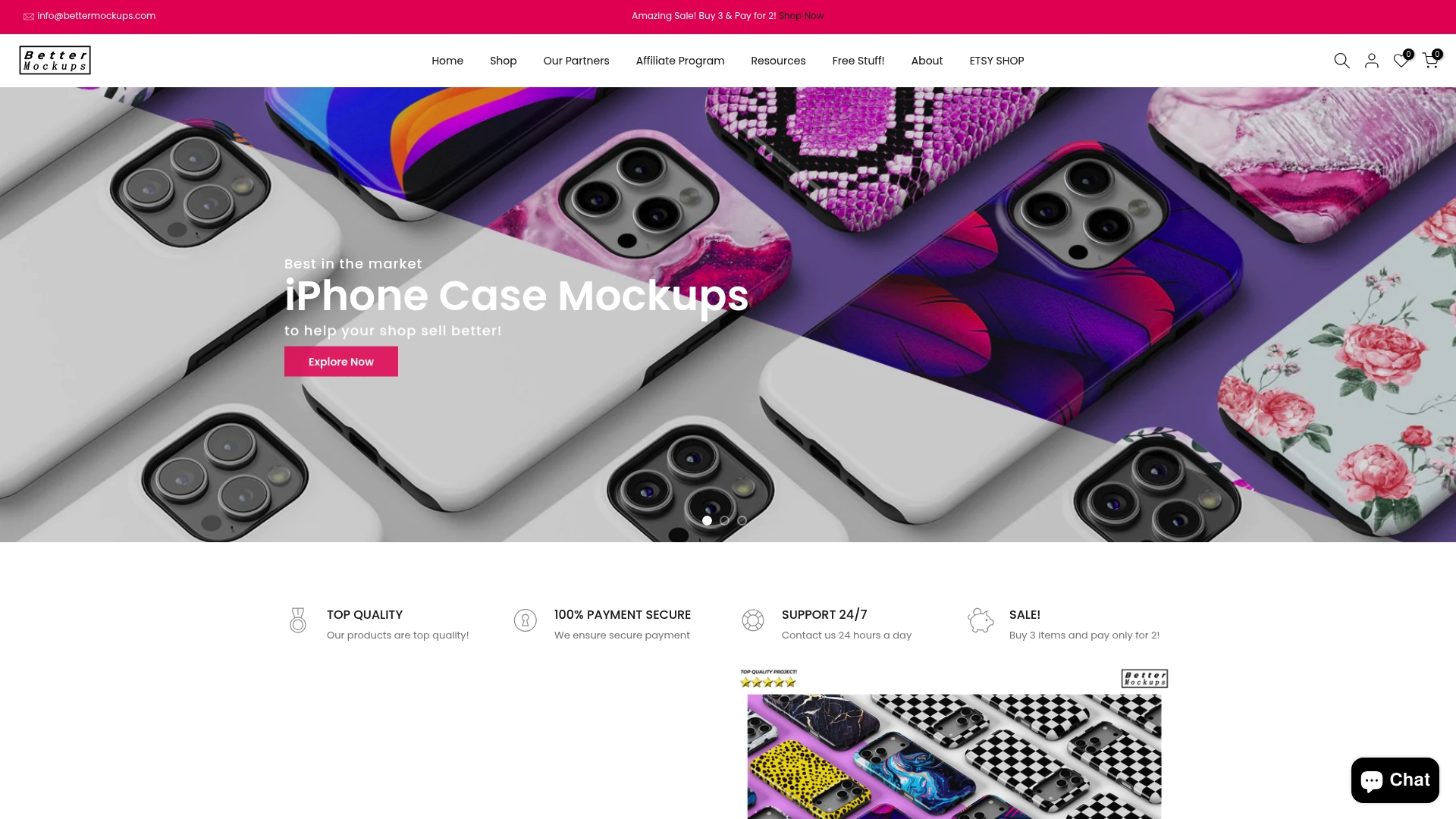
Discover our wide selection of premium templates like Phone Ring Holder Mockups – Bettermockups and Wireless Charger Mockups – Bettermockups designed for easy customization. With Bettermockups, you gain access to photorealistic PSD and Canva mockups tailored for social media, e-commerce platforms, and digital marketing campaigns. Don’t let poor visuals hold back your sales potential. Visit Bettermockups now to elevate your product listings and captivate your audience with true-to-life mockups crafted for success.
Frequently Asked Questions
What is a product mockup?
A product mockup is a visual representation that showcases a design concept in a realistic way, helping digital sellers present their offerings accurately and professionally.
What are the different types of product mockups?
The primary types of product mockups include static mockups, interactive mockups, and animated mockups, each serving different purposes for visualization and user engagement.
Why are product mockups important for digital sellers?
Product mockups are crucial as they help visualize designs before production, reduce costs, facilitate feedback, enhance marketing materials, and allow for quick design testing.
How can I avoid common mistakes when using mockups?
To avoid mistakes with mockups, ensure high image resolution, use consistent design styles and colors, simplify backgrounds, and maintain accurate product proportions.
Recommended
- Mockup Terminology Explained: Clarity for E-Commerce Success – Bettermockups
- Mock Ups: Transforming E-Commerce Product Listings – Bettermockups
- Types of Mockup Templates: Boosting Product Sales – Bettermockups
- Why Use Product Mockups for E-Commerce Success – Bettermockups
- The Facts About Custom Gear You Need to Know - Combatra


