

Redbubble print on demand offers one of the lowest-barrier entry points for artists and designers who want to sell products without touching inventory. Upload your artwork, pick which products to enable, and Redbubble handles printing, shipping, and customer service. It sounds simple because it is, but that simplicity comes with tradeoffs in control, margins, and brand ownership that every serious seller should understand before committing.
At BetterMockups, we work with POD sellers who've moved beyond marketplace dependency to run their own storefronts with accurate, production-matched mockups. But whether you're evaluating Redbubble as a starting point or comparing it against platforms like Printful and Printify, knowing exactly what you earn, and what you give up, matters. This guide breaks down how Redbubble actually works, what realistic earnings look like, and how it stacks up against alternatives that offer more control over your brand and product presentation.
How Redbubble print on demand works
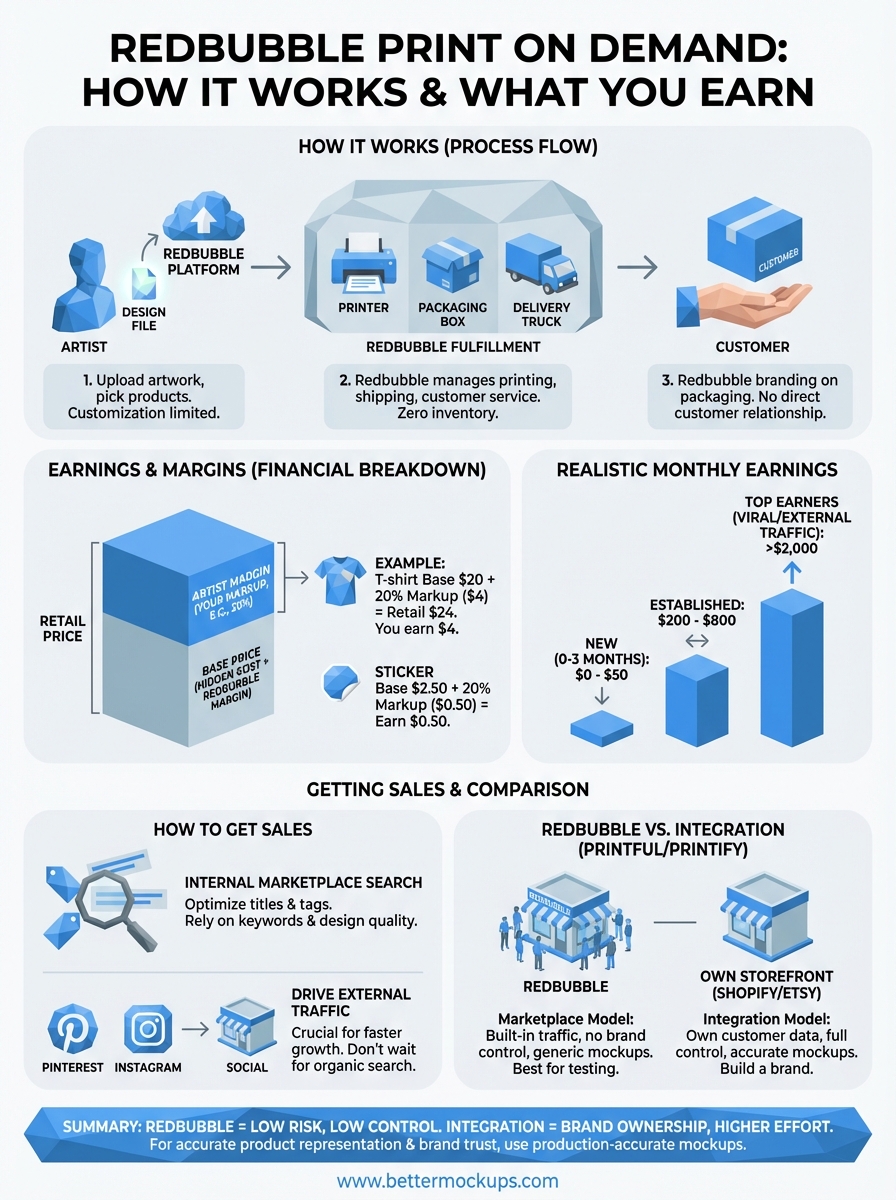
Redbubble print on demand operates as a fully integrated marketplace where you upload designs and Redbubble handles everything else. You create an account, upload your artwork, tag it with relevant keywords, and select which products to enable from their catalog of over 70 items (t-shirts, phone cases, stickers, mugs, wall art, and more). Once you enable a product, Redbubble automatically generates a listing with their default mockup images and your design applied.
The upload and product selection process
You control which products display your design, but you don't control the product specifications or mockup presentation. Redbubble uses its own mockup generator, which means every seller's listings look similar in style and structure. Your design gets scaled and positioned automatically, and you can adjust placement within their interface, but customization is limited compared to platforms where you supply your own mockup files.
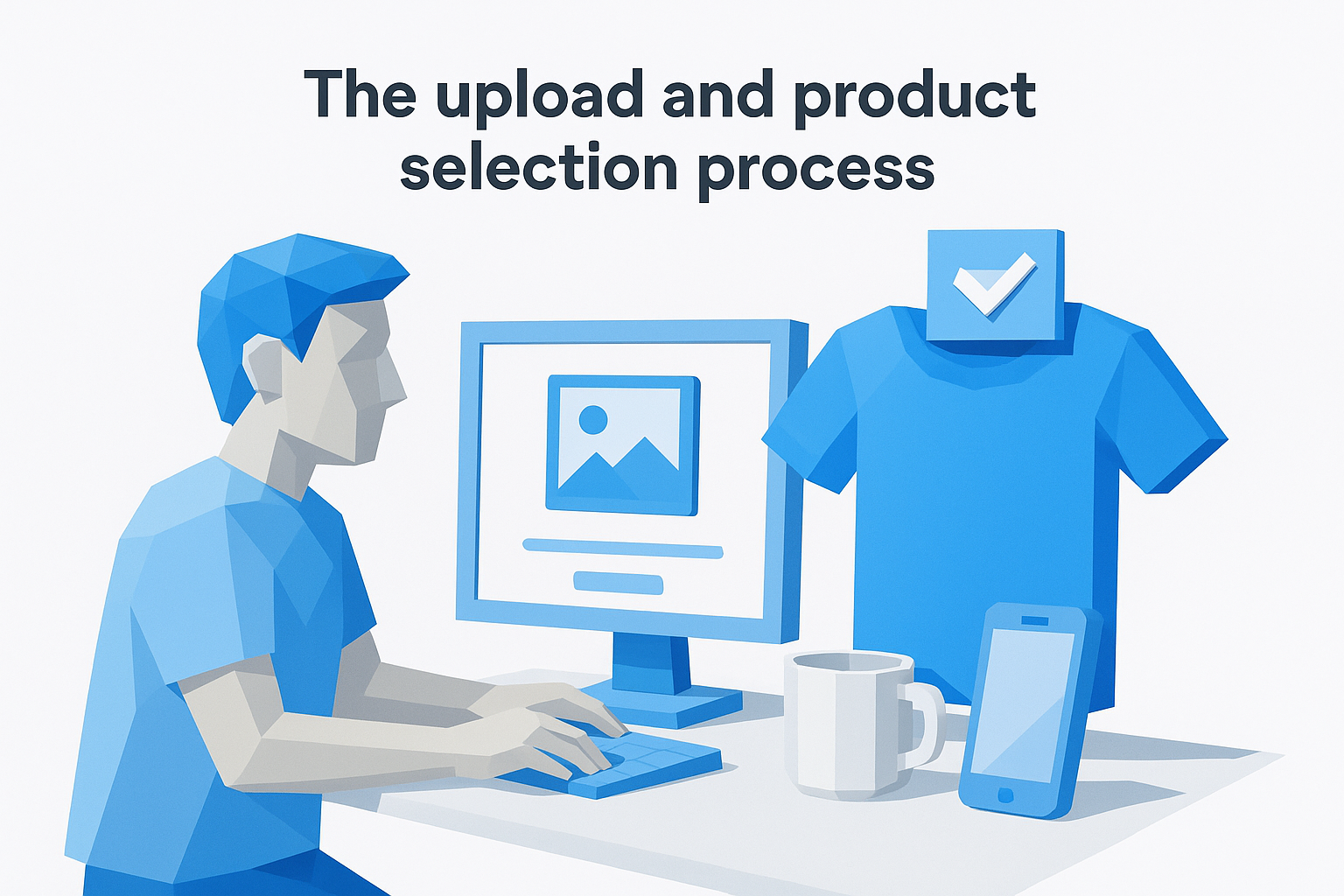
"Redbubble's automated mockup system makes launching fast, but it also means you forfeit control over how your product visually presents to buyers."
How orders get fulfilled and shipped
When a customer places an order, Redbubble routes it to one of their global fulfillment partners based on the customer's location and product type. The partner prints your design, packages the item, and ships it directly to the customer under Redbubble's branding. You never touch the product, manage inventory, or handle customer service inquiries related to shipping, defects, or returns. Redbubble owns the entire post-purchase experience, which protects you from operational headaches but removes any opportunity to build direct customer relationships or control quality assurance beyond Redbubble's standard processes.
Fees, margins, and what you can earn
Redbubble doesn't charge upfront fees to open a shop or list products, but it also doesn't tell you what it costs to produce each item. Instead, Redbubble sets a base price (their cost plus margin) and you add an artist margin on top, which becomes your earnings. You control your markup percentage, but you do it blind. You never see the production cost breakdown, shipping fees, or how much Redbubble keeps per transaction.
What Redbubble actually pays you
Your earnings equal the artist margin you set multiplied by your sales volume. For a t-shirt with a $20 base price, if you add a 20% artist margin, the product lists at $24 and you earn $4 per sale. Redbubble suggests a default 20% markup, which sounds reasonable until you calculate actual profit per item sold. On lower-priced products like stickers ($2.50 base price), a 20% margin nets you $0.50. Higher markups can price you out of competitive range, especially when buyers compare across sellers offering similar designs.
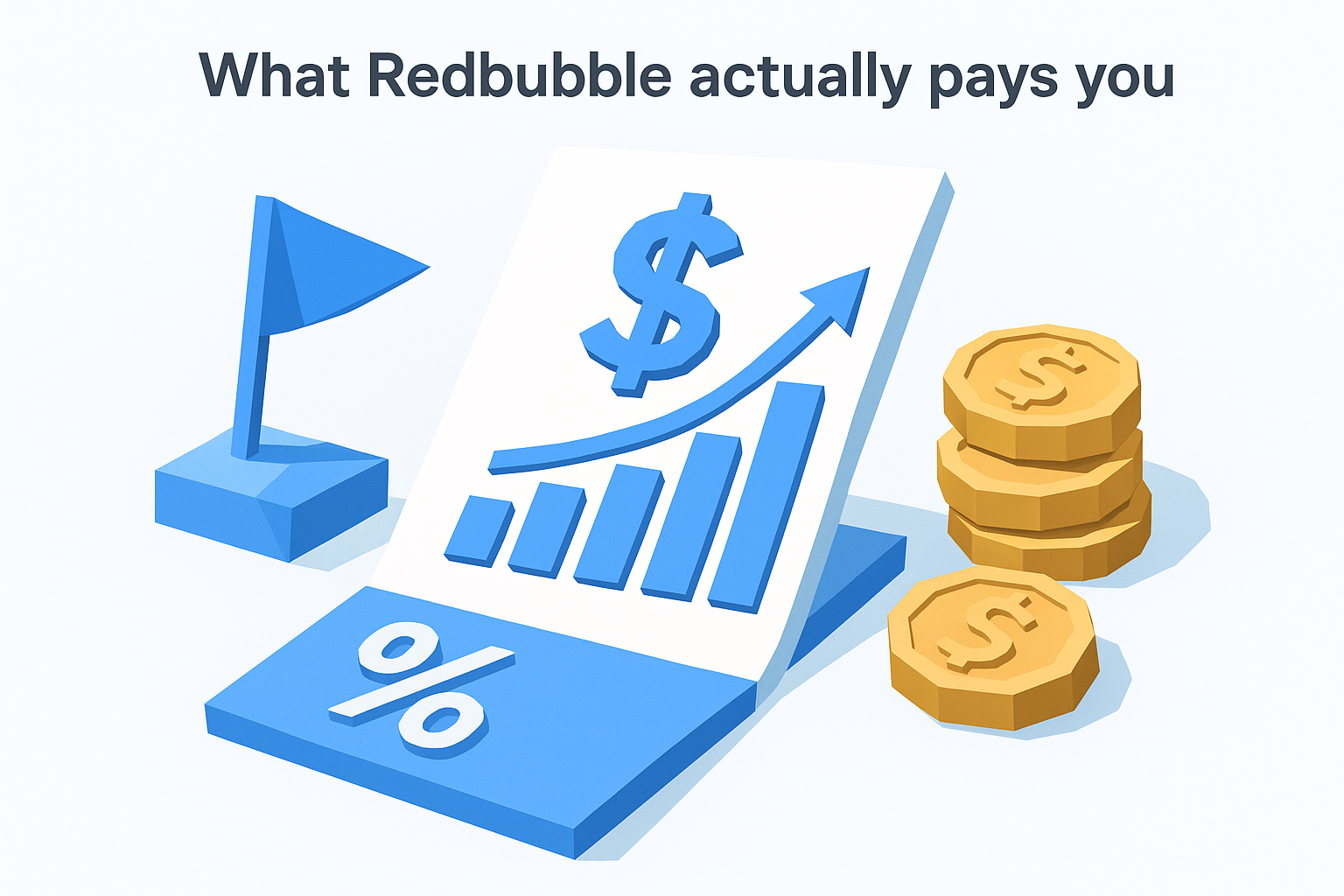
"You earn only what you markup, and Redbubble never discloses what they keep, which makes margin optimization guesswork instead of strategy."
Realistic monthly earnings
Most new sellers earn $0 to $50 in their first three months without external traffic. Redbubble print on demand relies heavily on internal marketplace search, and visibility depends on keyword tagging, design relevance, and competition saturation. Established sellers with 200+ designs and consistent uploads report $200 to $800 monthly, but these numbers require continuous content production and rare viral breakthroughs. Top earners exceed $2,000 monthly, though they typically drive traffic from external social channels rather than depending on Redbubble's organic reach alone.
How to set up a Redbubble shop
Setting up a Redbubble print on demand shop takes less than 10 minutes, but the decisions you make during account creation affect discoverability and credibility. You need a free account, original artwork files, and a clear understanding of which products make sense for your design style. Skip the bio and shop description, and you blend into the noise of 800,000+ other sellers using default profiles.
Creating your account and profile
You start by creating a free account at Redbubble and selecting a shop name that either reflects your brand or your design niche. Your shop name becomes part of your URL, and changing it later requires contacting support. Fill out your bio and shop description with specifics about your design approach or artistic focus, not generic statements about "unique designs." Buyers search by keyword, and descriptive profile text contributes to internal SEO within Redbubble's marketplace algorithm.
Uploading your first design
Upload your artwork as a high-resolution PNG or JPEG (minimum 2,400 pixels on the shortest side for optimal quality). Add a descriptive title using relevant keywords that match what buyers actually search for, like "minimalist line art cat" instead of "cute design." Tag your design with specific, searchable terms rather than broad categories like "art" or "cool." Select which products to enable based on where your design actually works visually, not just enabling everything to maximize listings.
"Your first upload sets the standard for how seriously you approach product-market fit, not just upload volume."
How to get sales on Redbubble
Redbubble print on demand sales depend almost entirely on internal search visibility and external traffic you drive yourself. The platform doesn't promote your shop or designs automatically, and the marketplace is saturated with sellers using identical product templates. You compete on keyword relevance, design quality, and whether you're willing to treat your shop as a content production system rather than a passive income experiment.
Optimize titles and tags for marketplace search
Your title and tags determine whether your design appears in search results when buyers look for specific products. Use descriptive, search-focused titles like "geometric wolf linework for nature lovers" instead of vague labels like "cool wolf design." Fill all available tag slots with specific terms buyers actually search, not aspirational keywords you hope they'll use. Test variations by monitoring which designs get views versus which get buried, then refine tags on underperforming listings.
"Your tags are your only discovery mechanism inside Redbubble's marketplace, and generic tags guarantee invisibility."
Drive external traffic or accept slow organic growth
Relying solely on Redbubble's internal traffic means competing against thousands of similar designs with identical mockups. Sellers who drive external traffic from Pinterest, Instagram, or niche forums see faster traction because they control the audience instead of waiting for algorithmic visibility. Organic growth through Redbubble search alone typically takes six months to a year before consistent sales appear, assuming you upload new designs weekly and optimize tags continuously.
Redbubble vs other print on demand options
Redbubble print on demand operates as a closed marketplace where you trade control for convenience, while platforms like Printful and Printify function as production backends you integrate into your own storefront. The fundamental difference isn't product quality or shipping speed, it's who owns the customer relationship and how much control you have over pricing, branding, and product presentation. Choosing between them depends on whether you're testing designs with minimal setup or building a brand you actually own.
Marketplace vs integration models
Redbubble lists your designs alongside millions of others in their marketplace, which means built-in traffic but zero brand differentiation. Printful and Printify integrate with Shopify, Etsy, or WooCommerce, requiring you to drive your own traffic but letting you control the entire customer experience. You set your own prices with integration platforms instead of adding a markup percentage to Redbubble's hidden base price, and you can use custom mockups that accurately represent what ships rather than relying on Redbubble's automated templates.
Control and customization differences
With Redbubble, you accept their mockups, their branding, and their margin structure in exchange for zero fulfillment management. Integration platforms let you upload production-accurate mockups, write your own product descriptions, and build email lists from customer data you actually own. The tradeoff is operational responsibility, but for sellers serious about brand credibility and long-term customer value, that tradeoff becomes an asset rather than a burden.
"Marketplaces rent you shelf space; integration platforms let you own the store."
Next steps
Redbubble print on demand works if you need immediate product validation with zero financial risk and can accept narrow margins and limited brand control. You upload designs, set markups, and wait for marketplace traffic to convert, which happens slowly unless you drive external visitors yourself. The platform handles fulfillment reliably, but you never own the customer relationship or control how your products visually present to buyers.
If you're building a brand that depends on accurate product representation and customer trust, you need mockups that match what actually ships. Generic marketplace templates create the expectation gap that leads to refunds and negative reviews, especially for products like phone cases where edge profiles, camera cutouts, and finish details matter. Sellers who move beyond Redbubble's automated mockups and use production-accurate templates eliminate that gap entirely, turning every listing into a promise they can actually keep and every review into proof their brand delivers what it shows.


