

If you sell phone cases for iPhones, AirPods, or Apple Watch, you've probably used Apple's product names in your listings without thinking twice. But Apple has a detailed, and strictly enforced, set of rules governing how third parties can reference its trademarks, logos, and product imagery. Violating Apple brand guidelines can result in listing removals, cease-and-desist letters, or permanent bans from platforms like Etsy, Amazon, and Shopify.
For print-on-demand sellers, this matters more than most realize. Every listing title, product description, and mockup image is a potential compliance touchpoint. At Bettermockups, we build production-accurate phone case mockup templates for POD sellers, and part of creating professional, trustworthy listings is knowing exactly what you can and can't do with Apple's intellectual property.
This guide breaks down Apple's official trademark and logo usage rules, explains where sellers most commonly cross the line, and gives you practical guidance for referencing Apple products in your marketing without putting your store at risk. Whether you're writing listing copy or designing storefront graphics, these are the rules worth knowing before you publish.
What Apple brand guidelines cover
Apple brand guidelines span several distinct categories of intellectual property, and understanding the scope is the first step to staying compliant. The rules cover trademarks (product names and wordmarks like "iPhone," "AirPods," and "Apple Watch"), logos and graphic symbols (like the Apple logo and app badges), product imagery, and the specific language Apple permits third parties to use in marketing or product descriptions. For POD sellers, all four categories show up in daily listing activity.
Apple's trademark rules apply to third-party sellers even when you're accurately describing a compatible product, "accurate" and "permitted" are not the same thing.
Trademarks and product names
Apple owns registered trademarks on every major product name in its lineup. When you use terms like "iPhone 16 case" or "AirPods Pro case" in a listing title, you're referencing a protected trademark. Apple's guidelines specify that you can use these names to describe genuine compatibility, but you cannot use them in a way that implies Apple sponsors, endorses, or is affiliated with your product. The distinction matters enormously for listing copy and storefront branding, and platforms like Etsy and Amazon enforce it on Apple's behalf.
Logos and visual assets
Apple's logo, the Finder icon, and app badges like the App Store logo each carry strict usage restrictions. You cannot reproduce the Apple logo on your product designs, packaging, or marketing graphics without explicit written authorization, which Apple does not grant to individual sellers. Incorporating the Apple logo into a phone case design is a direct trademark violation regardless of how it looks or whether you intend it as decorative. Visual use of Apple's marks carries the same legal weight as written misuse, so treat every design element the same way you treat text.
Why Apple enforces brand and trademark rules
Apple enforces its trademark and brand rules aggressively because brand dilution is a real business risk. When third parties misuse the Apple logo or imply Apple endorses their product, it creates customer confusion that Apple has spent decades and billions of dollars working to avoid. This isn't just legal housekeeping; it's active brand protection.
What's at stake for Apple
Apple's trademarks represent significant commercial value. The Apple brand is consistently ranked among the most valuable in the world, and protecting that value means controlling how the brand appears in the marketplace. When sellers misuse product names or logos, they can unintentionally signal that Apple stands behind a product it has no connection to, which damages consumer trust on both sides of the transaction.
Apple has a documented history of pursuing infringement claims against individual sellers, not just large corporations.
Understanding the apple brand guidelines isn't optional if you're running a professional POD store. Platforms like Etsy and Amazon actively monitor for trademark violations and will remove listings or suspend accounts when Apple files a complaint. Staying compliant protects your store from that risk before it becomes a real one.
Where to find official Apple guidance
Apple publishes its official rules across dedicated pages on its website, and going directly to those sources is the only reliable way to stay current. The most direct starting point for apple brand guidelines is the Apple Legal page at apple.com/legal.
Apple updates its trademark documentation periodically, so verify the current version before publishing new marketing materials or listing copy.
Apple's Trademark and Copyright Guidelines
Apple hosts both a Trademark List and a document titled "Guidelines for Using Apple Trademarks and Copyrights" on its legal pages. These cover which terms are registered trademarks, how to format them in written copy, and what Apple explicitly forbids third parties from doing.
A second document worth reading is Apple's Copyright Policy, also housed under apple.com/legal. Together, these two resources answer the majority of questions POD sellers encounter when writing listing titles, product descriptions, or storefront copy.
Apple Developer Documentation
If you build apps or Apple-compatible accessories, the Apple Developer portal at developer.apple.com includes brand usage guidelines specific to that context. For most POD sellers, the core trademark document covers what you need, but the developer resources provide useful context on what compatibility language Apple actually authorizes.
How to use Apple logos and trademarks correctly
Following the apple brand guidelines correctly means understanding what Apple permits and what it prohibits for third-party sellers. You can reference Apple product names to describe compatibility, but the language and context must never suggest Apple sponsors or endorses your product.
Referencing product names in listing copy
Apple requires you to use its trademarks as adjectives paired with a generic noun, not as standalone product names. "Compatible with iPhone 16" meets the standard. "The iPhone 16" used alone as a product name does not. Here are formats that reflect the difference:
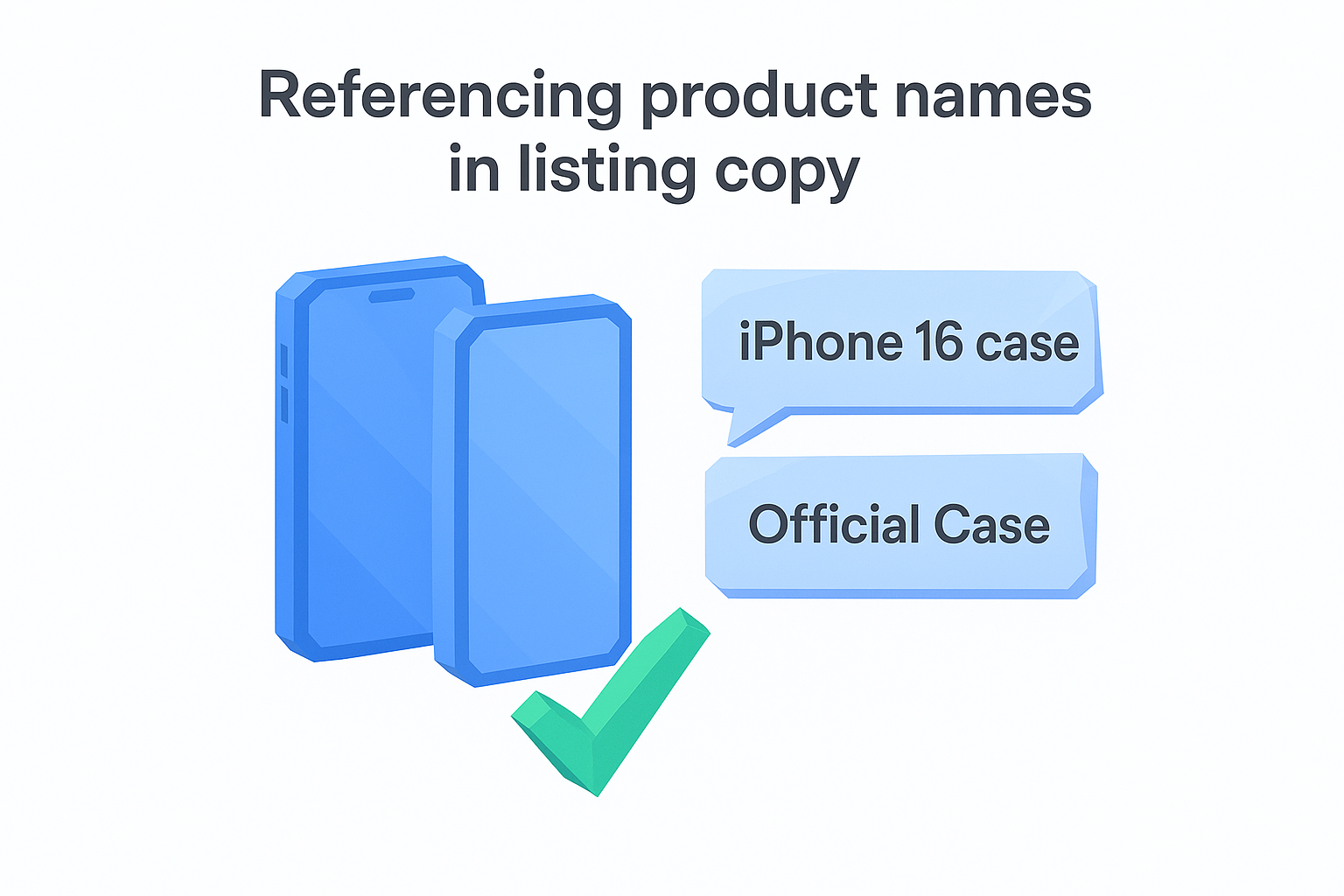
- Accepted: "iPhone 16 case," "AirPods Pro compatible case"
- Prohibited: "Official Apple Case," "Apple's iPhone 16 Cover"
Apple's guidelines require that your own brand name appear more prominently than any Apple trademark in your marketing materials.
Avoiding logo reproduction
You cannot place the Apple logo on any product design, mockup image, or storefront graphic without written authorization from Apple. This prohibition covers decorative use as well as functional labeling.
Your phone case mockup images fall under this rule as well. If the Apple logo appears anywhere in a mockup you publish to a listing, it creates a compliance risk regardless of where the logo falls within the image.
Common mistakes and how to avoid them
Most POD sellers who violate Apple's trademark rules don't realize it until a listing gets removed. Knowing where sellers most commonly go wrong with apple brand guidelines helps you catch issues before they affect your store's standing on Etsy, Amazon, or Shopify.
Using Apple's name as part of your brand
The most frequent mistake is placing "Apple" or "iPhone" into your shop name or branding. Terms like "iPhone Case Studio" imply an affiliation Apple hasn't authorized. Your brand name must stand on its own, and any Apple trademark should appear strictly as a compatibility descriptor, never as part of your identity.
- Avoid: "Apple Case Co.," "Official iPhone Cases," or any tagline claiming endorsement
- Use instead: "[Your Brand] Cases, Compatible with iPhone 16"
Never use an Apple trademark in a way that suggests your business is affiliated with, sponsored by, or endorsed by Apple.
Publishing mockups with Apple logos visible
A second common error is uploading phone case mockup images that include the Apple logo anywhere in the frame. Even when the logo appears on the device render rather than the case design itself, it creates a compliance risk in your listing. Before publishing, check that no Apple logo is visible in the final image you upload.
Next steps
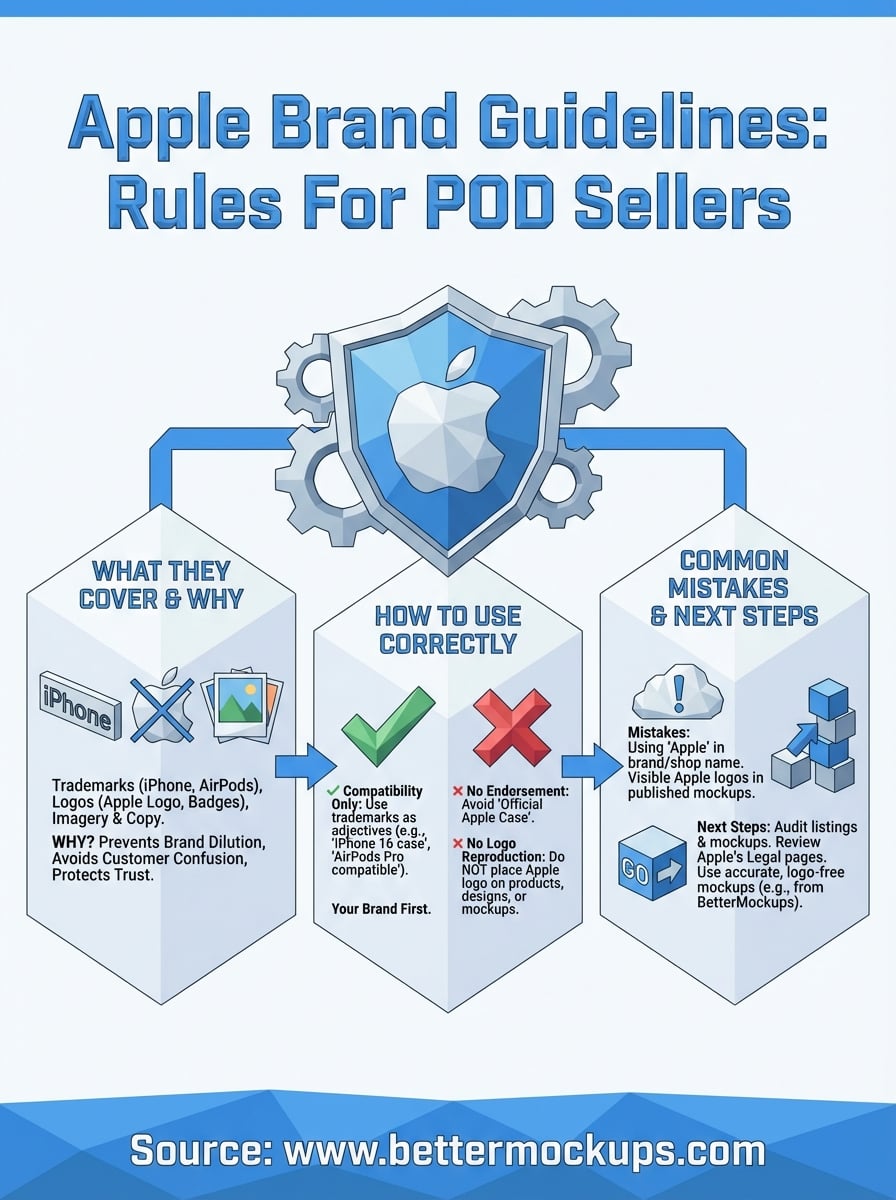
Apple brand guidelines aren't complicated, but they do require your active attention before you publish listings, not after. Every product name, listing title, and mockup image is a compliance touchpoint, and the sellers who avoid platform penalties are the ones who treat trademark rules as part of their standard publishing checklist rather than an afterthought.
Start by reviewing Apple's official trademark documentation at apple.com/legal and audit your existing listings for the most common violations: brand names that include Apple terms, descriptions that imply endorsement, and mockup images with visible Apple logos. Fixing these issues now protects your store's standing on Etsy, Amazon, and Shopify before a complaint triggers a removal.
Your mockup images carry the same compliance weight as your listing copy. For phone case mockups that accurately represent your product without crossing trademark lines, browse production-accurate templates at BetterMockups. Accurate mockups reduce refunds, strengthen your reviews, and keep your store's brand credible from day one.


