

Starting a phone case business from home offers a lucrative opportunity with minimal upfront investment. The global phone case market is projected to reach $13.6 billion by 2029, driven by consumers seeking personalized, protective accessories. Using print-on-demand services eliminates inventory risks while digital marketing channels like Instagram and TikTok provide direct access to motivated buyers. This guide walks you through practical steps to launch and grow a profitable home-based phone case business.
Table of Contents
- Prerequisites And What You Need Before Starting
- Step 1: Find Your Niche And Define Your Target Audience
- Step 2: Choose Your Phone Case Types And Sourcing Method
- Step 3: Create Your Designs And Product Mockups
- Step 4: Set Up Your Online Store And Brand
- Step 5: Market Your Phone Case Business
- Troubleshooting And Common Mistakes To Avoid
- Expected Results And Outcomes
- Boost Your Phone Case Business With Professional Mockups
- Frequently Asked Questions
Key takeaways
| Point | Details |
|---|---|
| Low startup costs | Print-on-demand eliminates inventory expenses, requiring only design tools and platform fees. |
| Niche selection drives profit | Identifying underserved markets and trending designs differentiates your brand from competitors. |
| Quality mockups boost sales | Professional product visuals increase buyer confidence and conversion rates significantly. |
| Social media fuels growth | Instagram, TikTok, and Pinterest deliver targeted traffic when paired with engaging visual content. |
| Avoid common pitfalls | Strategic pricing, continuous marketing, and customer feedback prevent revenue loss. |
Prerequisites and what you need before starting
Before launching your phone case business, you need foundational knowledge and resources to avoid costly early mistakes. Understanding the print-on-demand business model is critical for startup success because it shapes your entire operational approach.
The print-on-demand model eliminates traditional inventory management. Suppliers handle production and shipping after customers place orders, meaning you never touch physical products. This approach reduces financial risk dramatically compared to buying bulk inventory upfront.
Basic graphic design skills help you create unique case designs that stand out. If you lack design experience, platforms like Canva offer user-friendly templates, or you can hire freelance designers on Fiverr or Upwork. Quality designs directly impact your sales conversion rates.
Legal setup requirements vary by location but typically include business registration and tax considerations. Research your local regulations for home-based businesses and consider forming an LLC for liability protection. Keep accurate financial records from day one to simplify tax filing.
Access to ecommerce platforms forms your digital storefront. Shopify, Etsy, and BigCommerce offer beginner-friendly interfaces with integrated payment processing. Each platform has different fee structures, so compare costs against your expected sales volume.
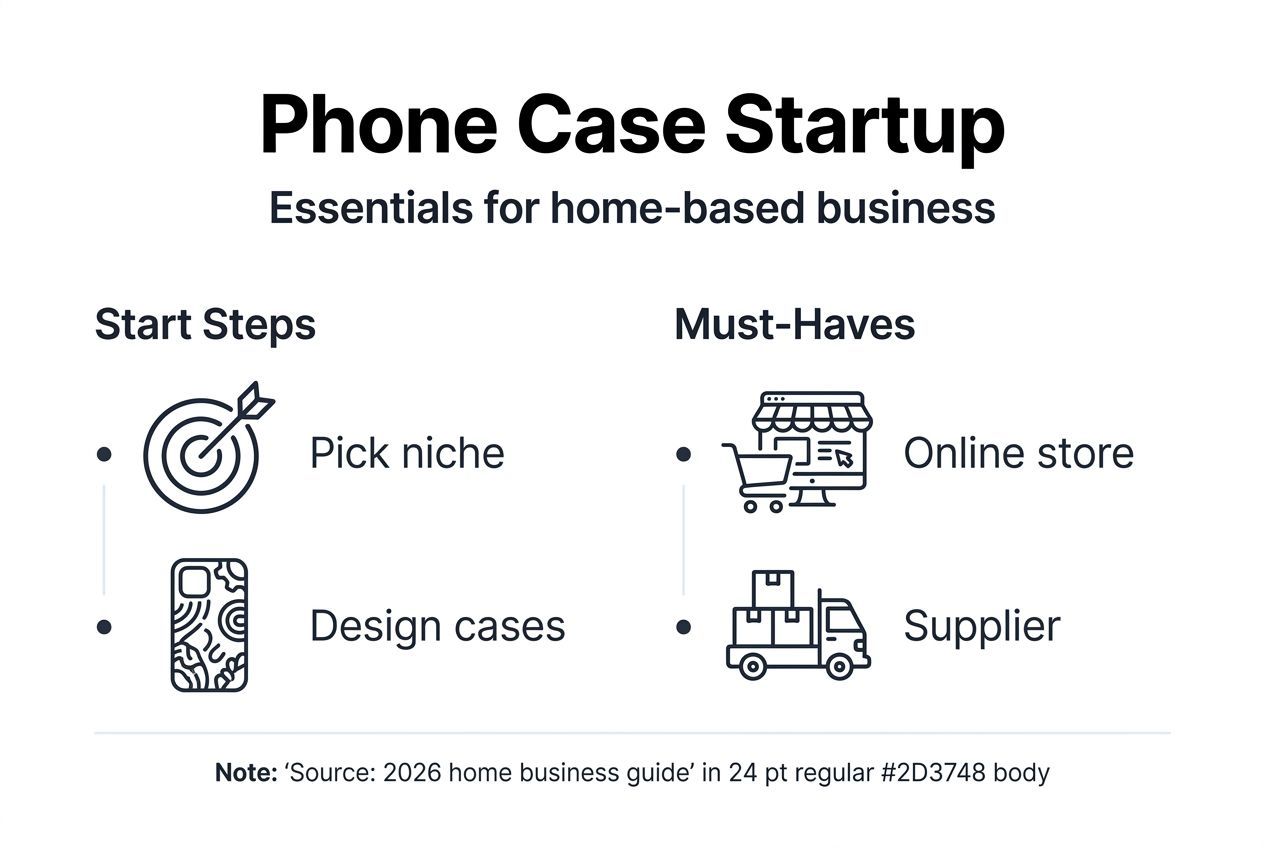
Social media marketing basics help promote your brand effectively. You need familiarity with content creation, hashtag strategies, and engagement tactics. Even basic knowledge of Facebook Ads or Instagram promotions gives you a competitive advantage.
Pro Tip: Start with one or two phone models initially to master the production process before expanding your catalog. This focused approach reduces complexity while you learn supplier workflows and customer preferences.
For a deeper dive into business foundations, explore this complete guide to starting phone case business that covers legal structures and financial planning.
Step 1: Find your niche and define your target audience
Market research separates profitable phone case businesses from struggling ones. Generic designs get lost in crowded marketplaces, while niche-focused products attract devoted customer bases willing to pay premium prices.
Google Trends reveals what consumers currently search for in phone accessories. Type phrases like “phone case designs” or “iPhone 16 cases” to see interest patterns over time. Social media platforms also provide valuable insights through hashtag analysis and trending content in accessory categories.
Identifying underserved niches creates competitive advantages. While mainstream designs flood major platforms, specific interests like vintage botanical illustrations, architectural drawings, or regional sports teams often lack quality options. Custom phone case designs are highly sought after by consumers seeking personal expression.
Starting with popular and niche phone models balances sales volume against higher profit margins. iPhone models dominate market share, ensuring steady traffic, while less common Android models face less competition and command better prices.
Focus designs on proven trending categories:
- Personalized text and monogram designs for gift buyers
- Nature-inspired patterns including florals and landscapes
- Pop culture references from current movies, shows, and memes
- Minimalist geometric patterns for professional audiences
- Nostalgic themes tapping into generational memories
Defining your target audience sharpens every business decision. Are you targeting college students, working professionals, or parents buying for teens? Each group has distinct preferences for colors, styles, and price points. Create a customer avatar detailing age, interests, income level, and shopping habits.
Pro Tip: Join Facebook groups and Reddit communities related to your chosen niche to observe authentic conversations about what people want in phone accessories. These unfiltered discussions reveal pain points your designs can solve.
This quick guide to launching phone case business offers additional niche selection frameworks to refine your market positioning.
Step 2: Choose your phone case types and sourcing method
Phone case materials significantly impact product quality, customer satisfaction, and pricing strategy. Understanding material differences helps you match products to your target market’s expectations.
Common case materials include:
- Polycarbonate (PC): Hard plastic offering strong impact protection at affordable prices
- Thermoplastic polyurethane (TPU): Flexible rubber-like material providing shock absorption and grip
- Biodegradable options: Eco-friendly materials appealing to environmentally conscious buyers
- Hybrid combinations: PC and TPU layers delivering maximum protection for premium segments
Print-on-demand allows entrepreneurs to start selling with zero inventory, automatic fulfillment, and immediate scalability. This model suits beginners with limited capital who want to test designs without financial commitment.
Comparing sourcing methods helps identify the best fit for your situation:
| Method | Pros | Cons | Best For |
|---|---|---|---|
| Print-on-demand | No inventory costs, easy scaling, automated fulfillment | Lower profit margins, less quality control | Beginners, low capital, testing markets |
| Wholesale | Higher margins, quality control, faster shipping | Requires upfront investment, inventory risk, storage needs | Established sellers, proven designs |
| Handmade | Unique products, premium pricing, full control | Time-intensive, limited scaling, material costs | Artisan brands, luxury positioning |
Selecting suppliers requires evaluating multiple criteria. Product quality determines customer satisfaction and return rates. Integration capabilities with your ecommerce platform streamline operations. Base costs and shipping fees directly affect profit margins. Customer reviews on platforms like Trustpilot reveal reliability issues before you commit.
Mixing popular and niche phone models helps balance consistent sales volume from mainstream devices with higher margins from specialty models. This diversification strategy protects revenue if one product line underperforms.
For detailed supplier comparisons and integration guides, review this guide to print-on-demand phone cases covering technical setup and quality standards.
Step 3: Create your designs and product mockups
Design quality directly determines whether browsers become buyers. Professional-looking cases command premium prices while amateur designs struggle even at discount rates.

Technical specifications ensure print quality meets customer expectations. Design files need 300+ DPI resolution to avoid pixelation on finished products. Most suppliers provide templates showing safe printing zones, preventing important design elements from getting cut off during production.
Trending design themes that consistently perform well:
- Personalized text with customer names or custom messages
- Minimalist line art and abstract geometric patterns
- Vibrant gradient colors and holographic effects
- Retro aesthetics from the 80s and 90s
- Hand-drawn illustrations with artistic texture
Photorealistic mockups showcase your cases in real-world contexts that help buyers visualize ownership. Instead of flat product images, mockups display cases on actual phones held by models, placed on desks, or used in lifestyle settings. High-quality digital mockups and appealing designs increase customer engagement and sales by building confidence before purchase.
Design tools vary in complexity and cost. Photoshop offers advanced capabilities for experienced designers willing to invest time learning the software. Canva provides accessible templates perfect for beginners who need quick results. Procreate suits iPad users wanting hand-drawn organic designs. Professional designers on freelance platforms deliver custom work if you prefer outsourcing creative tasks.
Pro Tip: Create design collections around cohesive themes rather than random individual cases. Collections encourage customers to browse multiple options and increase average order values when they purchase matching sets.
Align every design decision with your identified niche audience preferences. A professional targeting cases should feature sophisticated colors and subtle patterns, while youth-focused products can embrace bold statements and trending memes.
For advanced mockup strategies and professional templates, explore this success guide to creating phone case designs with conversion-focused visual techniques.
Step 4: Set up your online store and brand
Your online presence functions as your digital storefront, sales team, and brand ambassador combined. A well-designed store builds trust while poor execution drives potential customers to competitors.
Ecommerce platforms like Shopify and Etsy empower entrepreneurs to launch stores quickly with minimal technical skills. Shopify offers complete customization and brand control but requires monthly subscription fees. Etsy provides built-in traffic from marketplace browsers but takes per-transaction fees and limits branding flexibility. BigCommerce suits sellers planning rapid scaling with advanced features.
Brand name and logo creation establishes your market identity. Choose names that reflect your niche while remaining memorable and easy to spell. A confusing name creates friction in word-of-mouth marketing. Logo design should work across all sizes, from website headers to social media profile pictures. Free tools like Canva offer logo templates, or invest in professional design for stronger brand recognition.
Product listings require strategic optimization. Write detailed descriptions explaining case materials, protection features, and design inspiration. Address common customer questions preemptively to reduce support inquiries. Include multiple high-quality images showing cases from various angles plus lifestyle shots demonstrating real-world use.
Website layout significantly impacts conversion rates. Navigation should be intuitive with clear categories for phone models and design styles. Mobile responsiveness is critical since most shoppers browse on phones. Page load speeds under three seconds prevent abandonment. Include prominent search functionality helping visitors find specific designs quickly.
Integrate reliable payment gateways accepting major credit cards and digital wallets like Apple Pay. Clear business policies covering returns, shipping timelines, and customer service build buyer confidence. Display these policies prominently, especially on product and checkout pages.
Explore detailed setup instructions in this phone case business setup guide covering platform selection and optimization tactics.
Step 5: Market your phone case business
Exceptional products fail without effective marketing driving traffic to your store. Strategic promotion transforms inventory into revenue by connecting designs with motivated buyers.
Instagram, TikTok, and Pinterest are high-engagement channels that significantly increase phone case sales through visual storytelling. Each platform rewards different content approaches. Instagram favors polished product photography and carousel posts showing design details. TikTok prioritizes entertaining short videos demonstrating case durability or unboxing experiences. Pinterest users actively search for shopping inspiration, making it ideal for driving traffic to product pages.
Influencer collaborations amplify reach beyond your existing audience. Micro-influencers with 10,000 to 50,000 engaged followers often deliver better ROI than celebrity partnerships. They charge reasonable fees and their audiences trust recommendations more authentically. Send free products to relevant influencers and track which partnerships generate actual sales using unique discount codes.
Seasonal campaign planning maximizes revenue during peak buying periods. Seasonal trends like back-to-school and holidays drive up to 40% of annual revenue, requiring early campaign planning to capitalize on demand spikes. Create themed designs and marketing content at least six weeks before major holidays.
Professional mockups in social media ads dramatically improve click-through and conversion rates. Ads featuring cases in lifestyle contexts outperform simple product shots because they help viewers imagine owning and using the product. Video mockups showing 360-degree case views perform especially well in Facebook and Instagram ad placements.
SEO best practices for product pages improve organic traffic over time:
- Include target keywords naturally in titles and descriptions
- Write unique descriptions for each product avoiding duplicate content
- Optimize image alt text with descriptive phrases
- Build internal links between related product pages
- Encourage customer reviews which add fresh content regularly
Track engagement metrics continuously to optimize campaigns. Monitor which social posts generate the most saves and shares. Analyze which ad creatives deliver the lowest cost per acquisition. Use Google Analytics to identify which traffic sources convert best. Adjust spending and content strategy based on data, not assumptions.
Pro Tip: Create user-generated content campaigns encouraging customers to share photos with your cases using a branded hashtag. Repost the best submissions to build social proof while rewarding loyal customers with exposure.
Learn advanced tactics in this guide on expert phone case marketing tips covering paid advertising and organic growth strategies.
Troubleshooting and common mistakes to avoid
Even well-planned businesses encounter obstacles that threaten profitability. Recognizing common mistakes early prevents revenue loss and customer dissatisfaction.
Common mistakes such as underpricing and ignoring niche research lead to lost revenue and low customer retention. Many beginners price products based solely on production costs without factoring in marketing expenses, platform fees, and profit margins. Research competitor pricing within your niche and position your products accordingly. Premium designs justify premium prices when marketing emphasizes quality and uniqueness.
Neglecting niche differentiation causes brands to blend into crowded marketplaces. Generic designs compete primarily on price, forcing a race to the bottom that erodes margins. Continuously refine your niche focus based on what designs sell best. Double down on successful themes rather than spreading efforts across unrelated categories.
Marketing inconsistency kills momentum after initial launch excitement fades. Businesses that post sporadically on social media or pause advertising during slow periods struggle to maintain sales velocity. Establish sustainable content calendars and minimum advertising budgets to maintain consistent visibility.
Key mistakes to avoid:
- Choosing suppliers based solely on lowest prices without considering quality and reliability
- Ignoring customer feedback and reviews that reveal product or service issues
- Failing to collect email addresses for remarketing to interested visitors
- Copying competitor designs exactly instead of creating original interpretations
- Overlooking mobile shopping experience despite majority traffic coming from phones
Active customer engagement builds loyalty and generates valuable improvement insights. Respond promptly to questions and complaints. Send follow-up emails asking for feedback after purchases. Use negative reviews constructively to identify areas needing enhancement.
Supplier selection deserves thorough vetting since quality issues damage your brand reputation. Order samples before committing to ensure print quality, color accuracy, and material durability meet standards. Monitor customer complaints about product quality and switch suppliers if problems persist.
Pro Tip: Implement a systematic testing process for new designs by releasing them to small audiences before full launches. This approach identifies which designs resonate before investing heavily in inventory or marketing.
For troubleshooting frameworks and quality control processes, review launching your own phone case business tips covering operational excellence.
Expected results and outcomes
Realistic expectations prevent disappointment while helping you measure progress accurately. The phone case market offers genuine opportunity but requires strategic execution to capture it.
The global phone case market is projected to reach $13.6 billion by 2029 with a CAGR of 3.3%, indicating steady consumer demand. This growth stems from smartphone proliferation and consumer desire for personalization and device protection. Your business captures a portion of this expanding market based on niche focus and marketing effectiveness.
Profit margins typically range from 40% to 200% depending on the business model and design pricing. Print-on-demand businesses often see 40-60% margins after platform fees and supplier costs. Direct-to-consumer brands with wholesale inventory achieve higher margins but require upfront capital investment. Premium positioning with unique designs commands the highest margins when marketing justifies elevated prices.
Seasonal sales patterns significantly impact annual revenue. Back-to-school periods in August and September drive student purchases. Holiday shopping from November through December accounts for the largest revenue spike. Valentine’s Day, Mother’s Day, and graduation seasons create additional peaks. Strategic planning around these periods maximizes yearly earnings.
Realistic timeline expectations for business milestones:
| Milestone | Typical Timeline | Key Success Factors |
|---|---|---|
| First sale | 1-4 weeks | Product quality, initial marketing push, pricing strategy |
| Consistent monthly revenue | 2-4 months | Sustained marketing, positive reviews, design iteration |
| Breaking even | 3-6 months | Cost management, conversion optimization, traffic growth |
| Scaling to full-time income | 6-18 months | Brand building, product expansion, marketing efficiency |
Measuring success requires tracking multiple metrics beyond just revenue. Sales growth month over month indicates whether your business gains traction. Profit margin maintenance ensures you don’t sacrifice profitability for volume. Social media engagement rates predict future traffic and sales. Customer lifetime value reveals whether buyers return for repeat purchases. Cart abandonment rates identify friction points in your checkout process.
Initial growth happens faster when you leverage existing audiences through partnerships or personal networks. Completely cold starts require more patience as you build brand awareness from zero. Most successful businesses see meaningful traction within three to six months of consistent effort across product development and marketing.
For comprehensive planning resources and growth benchmarks, visit thriving phone case business expectations with detailed financial projections.
Boost your phone case business with professional mockups
Your product presentation quality directly influences conversion rates. Buyers scrolling through hundreds of case options stop at visuals that immediately convey quality and help them imagine ownership.
Professional photorealistic mockups build customer confidence by displaying your designs in real-world contexts. Instead of flat product images that feel generic, lifestyle mockups show cases being used by people in relatable situations. This approach reduces purchase hesitation because buyers mentally experience owning the product before checkout.
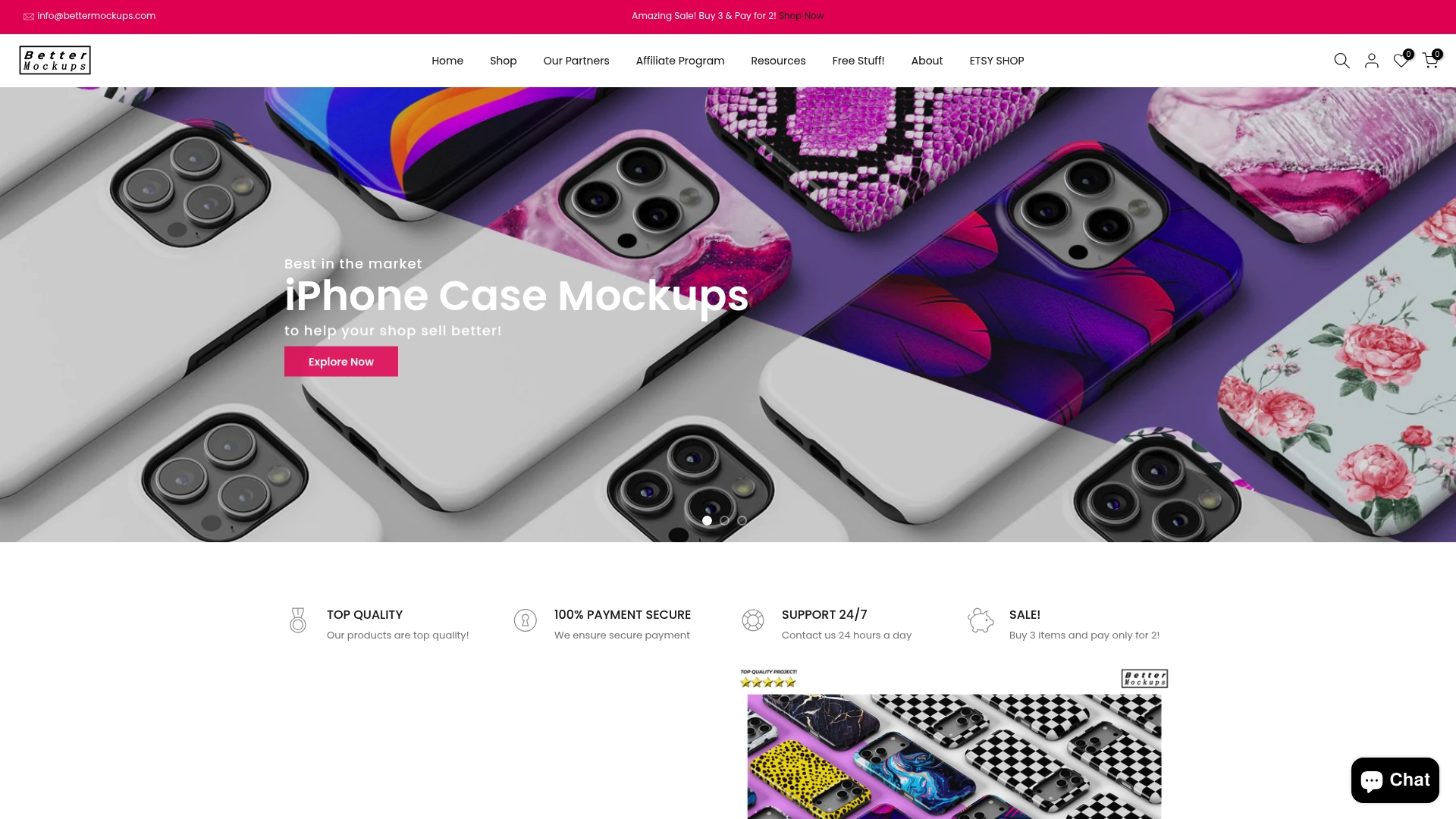
Bettermockups specializes in high-quality phone case mockups designed specifically for e-commerce sellers and digital marketers. The platform offers extensive video mockups collection featuring animated product showcases perfect for social media ads and website headers. These dynamic visuals capture attention in crowded feeds while demonstrating case features from multiple angles.
The new mockups collection includes the latest phone models and trending presentation styles, ensuring your marketing stays current with consumer expectations. Templates work seamlessly with Photoshop and Canva, accommodating various skill levels from beginners to advanced designers.
Implementation is straightforward with detailed guidance available through the how to use mockups guide. Simply insert your design into the provided smart object layers, and the mockup automatically applies realistic lighting, shadows, and perspective. This efficiency lets you create dozens of product presentations in minutes rather than hours.
Frequently asked questions
How much does it cost to start a phone case business from home?
Startup costs remain remarkably low with print-on-demand, typically between $100 and $500 initially. This covers design software subscriptions, ecommerce platform fees for the first few months, and sample products for quality verification. No inventory investment is required since suppliers only produce items after customers order. Marketing budgets vary based on your organic versus paid traffic strategy, but you can start with zero ad spend by focusing on social media content creation.
Which print-on-demand platforms are best for phone case businesses?
Printify, Printful, and Podbase rank among the most popular due to reliable quality, extensive phone model catalogs, and seamless ecommerce integrations. Printify offers the widest supplier network with competitive pricing, while Printful provides faster fulfillment and premium branding options. Podbase specializes in phone accessories with particularly strong mockup libraries. Choose platforms based on your target phone models, desired case materials, and integration needs with your chosen ecommerce platform.
How long does it take to see profits from a phone case business?
Most businesses achieve their first profits within three to six months of consistent marketing and product optimization. Initial months focus on testing designs, refining target audiences, and building social media presence. Sales typically start slowly then accelerate as you identify winning products and marketing channels. Businesses investing in paid advertising often see faster traction but require larger budgets. Organic growth through content marketing takes longer but builds sustainable traffic without ongoing ad costs.
What are the biggest challenges when starting this business?
Identifying profitable niches proves difficult for many beginners who either choose oversaturated markets or obscure interests with insufficient demand. Effective marketing requires learning multiple platforms and content creation skills that take time to develop. Pricing strategies challenge sellers balancing competitive rates against healthy profit margins. Supplier reliability directly impacts customer satisfaction, making vendor selection critical. Continuous customer feedback collection and response requires dedicated time and emotional energy that surprises many new entrepreneurs expecting passive income.


