

The terms get swapped around constantly, but motion graphics vs animation aren't the same thing, and the difference matters more than most people think. One is built to explain. The other is built to tell a story. Choosing the wrong format for your project means spending time and budget on something that doesn't do the job you actually needed it to do.
If you sell phone cases on TikTok Shop or run social ads, you've already seen both in action, animated characters in brand storytelling spots and clean motion graphics driving product-focused content. At Bettermockups, we build video mockup templates that use motion to showcase phone case designs accurately, so understanding where motion graphics end and full animation begins is something we think about constantly when creating assets that actually convert for POD sellers.
This article breaks down the real differences between motion graphics and animation, definitions, use cases, examples, and which format fits which purpose. No jargon walls, no unnecessary history lessons. Just a clear framework so you can make better decisions about the motion content you create or commission.
Why the difference matters
When you pick the wrong format, you don't just waste time. You produce content that confuses your audience instead of converting them. Motion graphics and animation are tools, and like any tool, each one is built for a specific job. Using a flathead screwdriver on a Phillips screw technically gets the job done, but it does it poorly. Understanding what each format actually does well is what separates creators who get results from those who wonder why their video content isn't landing.
The cost of using the wrong format
Choosing animation when you need motion graphics, or vice versa, creates a mismatch between your message and your medium. If you're trying to explain how a product works or show a design on a phone case, a character-driven animated story won't communicate those facts clearly. Your audience will watch it and still not know what the product looks like or why they should buy it. On the flip side, a cold, data-heavy motion graphic can feel transactional and flat inside a campaign that's trying to build genuine brand connection.
The format you choose isn't just a visual decision. It's a communication decision that shapes whether your audience understands you or scrolls past you.
Why product sellers feel this most
If you run a print-on-demand store or create product-focused content for platforms like TikTok Shop, the motion graphics vs animation distinction carries real business weight. You're not making brand films. You're making conversion content that needs to show a product accurately, quickly, and in a way that earns the click. A well-built motion graphic using a production-accurate phone case mockup does exactly that. A character animation of someone enjoying a product does not, at least not in the 15 seconds you have at the top of a feed before someone moves on.
Product sellers need visual accuracy and immediate clarity above almost everything else. When your video mockup shows the correct edge profile, the right finish, and the actual camera cutout placement, your viewer knows exactly what they're ordering. That's a motion graphics job. Knowing which format belongs in which situation stops you from commissioning the wrong asset and lets you build a content library that actively supports your listings rather than just decorating them.
What motion graphics are
Motion graphics are designed elements in motion built to communicate information visually. They combine shapes, text, icons, and abstract visuals to deliver a message faster than static content can. Think of a product video showing a phone case rotating with its finish and edges clearly visible, or a bar chart that builds itself onscreen during an explainer video. The movement exists to guide attention and clarify information, not to construct an emotional narrative.
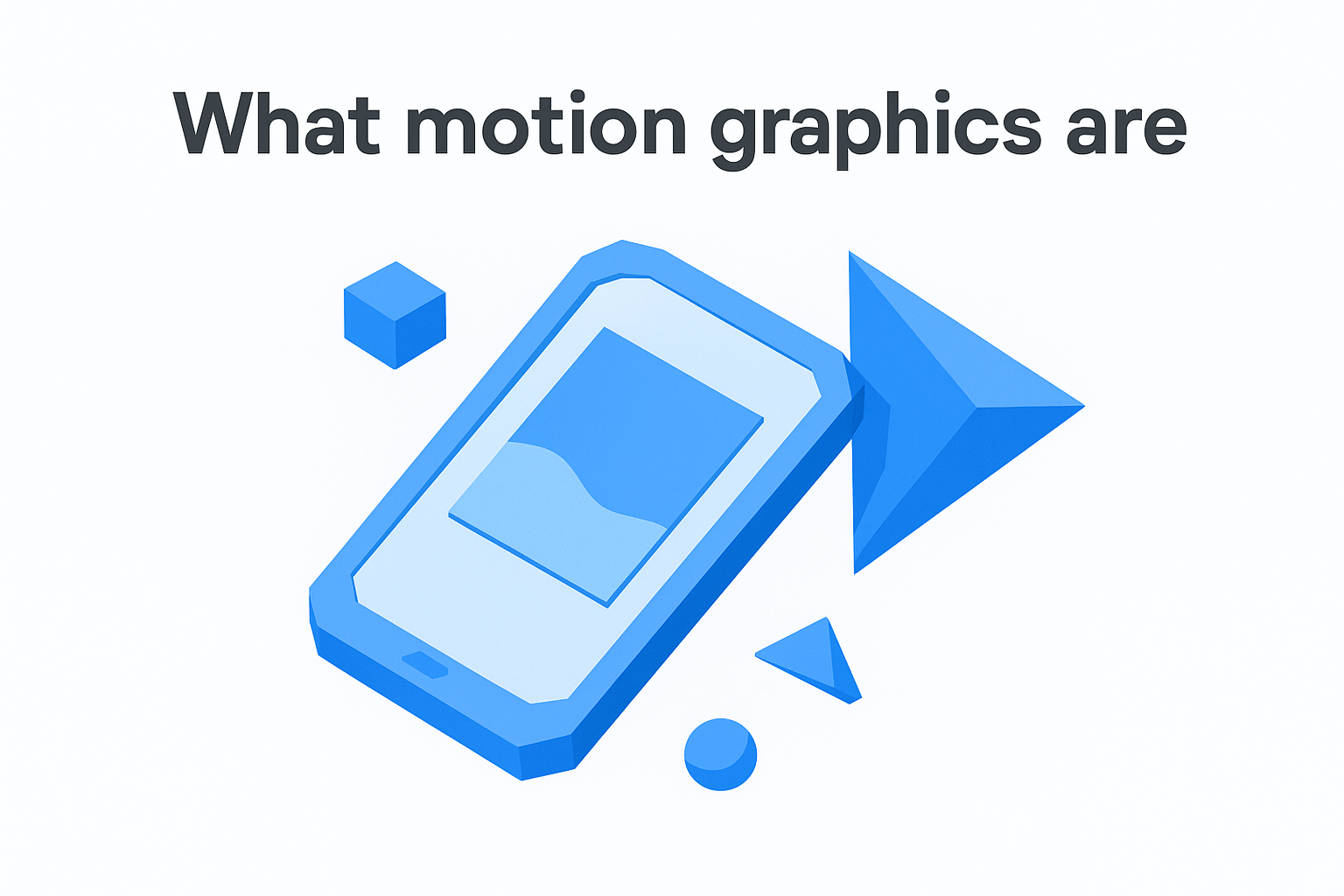
The building blocks of motion graphics
These assets rely on design principles rather than storytelling ones. The core components are typography, geometric shapes, color, and layout, all set in motion through tools like Adobe After Effects. Timing and visual hierarchy drive every decision, not character development or plot structure. Each element moves because it needs to land a specific point for your viewer.
What separates a strong motion graphic from a weak one is intentional movement. When a shape slides in to direct your eye toward a key piece of information, that's purposeful design working as intended. Every transition, build, and pause should serve comprehension, not spectacle. If an element moves without a reason, it creates visual noise and pulls attention away from the message you actually need to land.
Motion graphics use movement as a design tool, not as a storytelling device.
Where motion graphics show up
In the broader motion graphics vs animation conversation, motion graphics appear most often in product demos, explainer videos, data visualizations, and social ad content. For phone case sellers, a video mockup showing a design on a rotating case is a motion graphic. It moves to give your viewer a complete, accurate look at the product, keeping the message tight and the conversion path short.
What animation is
Animation is the craft of creating movement to tell a story. Where motion graphics use movement to clarify information, animation uses it to build characters, worlds, and emotional arcs that pull your audience into a narrative. A character walking through a scene, reacting to events, and driving a plot forward is animation doing its core job. The movement serves the story first, and any information your viewer receives comes through that narrative lens rather than through direct visual explanation.
The storytelling engine behind animation
Animation operates on character, emotion, and sequence. A fully animated piece introduces figures or creatures your audience can connect with, places them in situations that develop over time, and uses movement to convey feelings that pure design elements can't replicate on their own. In the broader motion graphics vs animation discussion, this is the clearest line: motion graphics inform, animation immerses.
Animation earns its length because it needs time to build the emotional investment that makes the story land.
This immersive quality is exactly what makes animation expensive and time-intensive to produce well. Every frame requires deliberate decisions about character movement, expression, and timing that go far beyond simply animating a shape or a text block. A 30-second animated brand spot can represent days of production work, and the payoff only materializes when the story and the emotional connection both land cleanly.
Where animation fits in your content strategy
You reach for animation when your goal is connection rather than comprehension. Brand origin stories, emotional campaigns, and content designed to build long-term audience loyalty are natural fits. If you need your viewer to feel something specific about your brand, animation gives you the tools to make that happen in a way that a clean motion graphic simply cannot.
Motion graphics vs animation: key differences
The clearest way to separate the two is by asking what the content needs to accomplish. Motion graphics move designed elements to explain or demonstrate something specific. Animation moves characters and environments to build a story your audience connects with emotionally. Every other difference between the two formats flows directly from that core distinction.
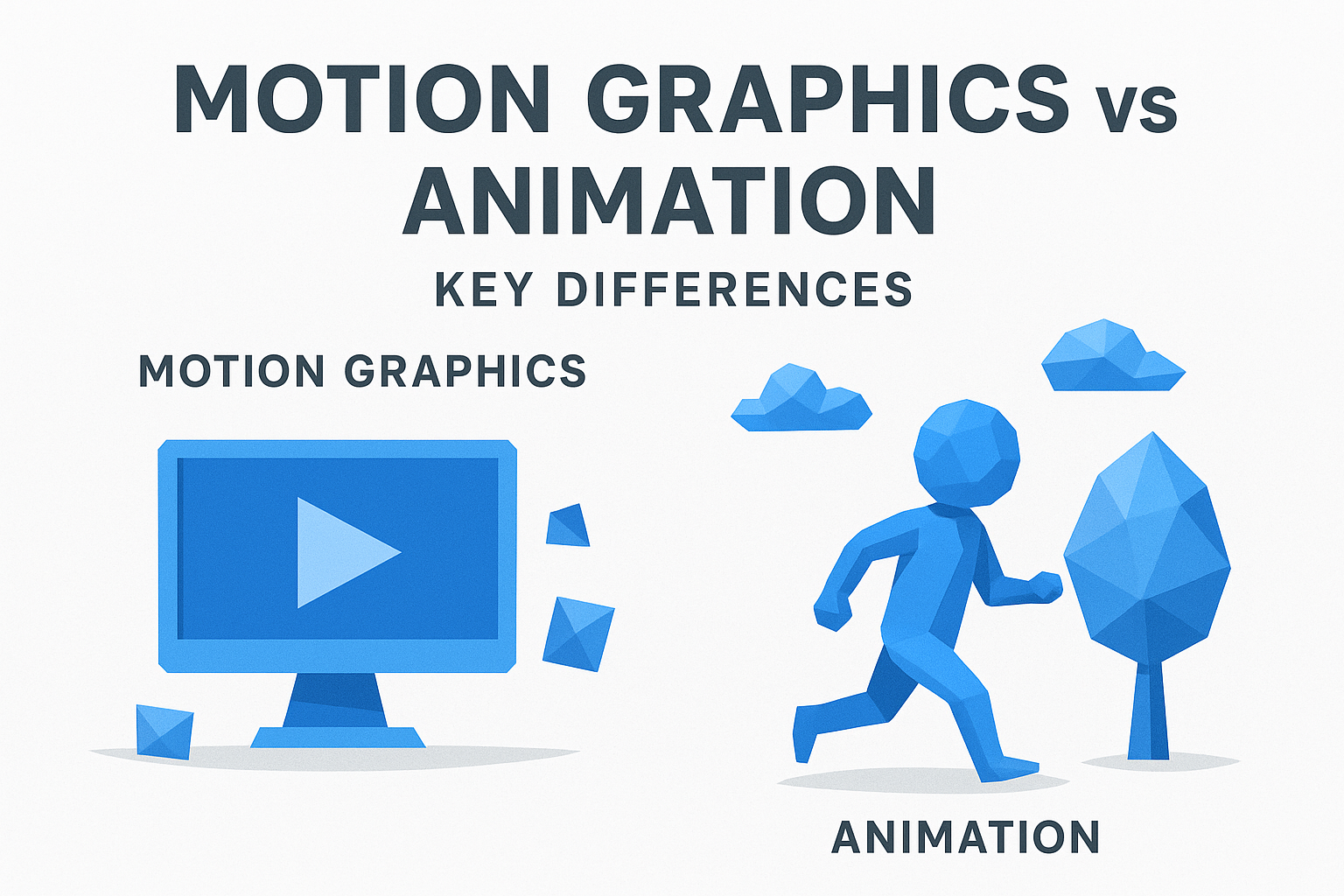
Purpose and audience expectation
When you place motion graphics vs animation side by side, the purpose gap becomes immediate. Motion graphics deliver information efficiently, keeping your viewer oriented toward a specific action or understanding. Animation delivers experience, asking your viewer to invest time in a narrative. Your audience arrives with different expectations for each format, and mismatching those expectations breaks trust before your content has a chance to work.
Your viewer decides within seconds whether the format you chose matches what they came to see.
Production time and cost
Animation requires significantly more production time than motion graphics because every moving element needs to serve a story rather than just a message. A 15-second product video mockup built with motion graphics can take hours to produce. A character-driven animated piece of the same length can take days. That gap in production time translates directly into cost, which means choosing the wrong format doesn't just hurt your content, it drains your budget on something that doesn't deliver what your audience needed.
| Factor | Motion Graphics | Animation |
|---|---|---|
| Primary goal | Inform or demonstrate | Tell a story |
| Production time | Lower | Higher |
| Best for | Product content, ads, data | Brand films, emotional campaigns |
| Viewer expectation | Quick clarity | Narrative investment |
How to choose the right style for your goal
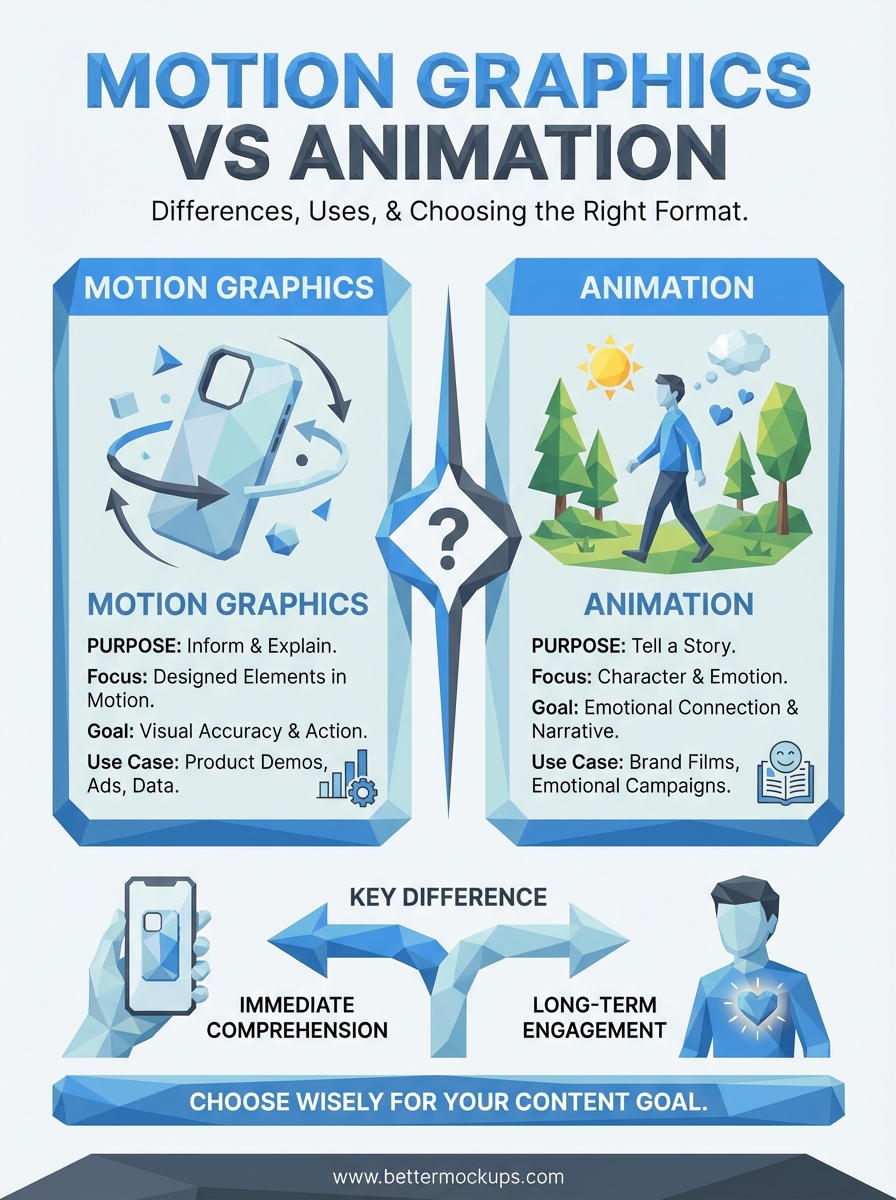
Deciding between motion graphics vs animation comes down to one question: what do you need your viewer to do after watching? If the answer involves buying, clicking, or understanding a specific thing, you're almost always looking at motion graphics. If the answer involves feeling a specific way about your brand over a longer horizon, animation becomes worth the investment.
When motion graphics fit better
Motion graphics belong in your workflow when speed of comprehension is the priority. Product demos, social ads, listing videos, and any content that needs to communicate a specific feature or design accurately will perform better as a motion graphic than as an animated story. For phone case sellers building content for TikTok Shop or Etsy listings, a production-accurate video mockup showing the case design in motion gives your viewer everything they need to make a purchase decision without asking them to follow a narrative first.
Use motion graphics when your timeline and budget are tight, when you need high output across many SKUs, or when your content needs to function inside a feed where attention spans are measured in seconds rather than minutes.
When animation fits better
Animation earns its place when you need your audience to feel something that a clean design element cannot convey on its own. Brand launch campaigns, origin stories, and content built to establish long-term emotional loyalty are the situations where animation's higher production cost pays off.
Reach for animation when the connection matters more than the conversion happening right now.
Ask yourself whether your content goal is immediate action or long-term relationship building before committing to either format. That single distinction will save you time, budget, and the frustration of producing content that works against your actual objective.
Final takeaways
The motion graphics vs animation decision isn't about which format looks better. It's about which one matches what your content actually needs to accomplish. Motion graphics inform and drive action. Animation builds emotional connection over time. Picking the right tool based on your goal, timeline, and budget is what turns video content from a production expense into a direct revenue driver.
For product sellers, that choice almost always points toward motion graphics. Your listings need visual accuracy and fast comprehension, not narrative investment. A production-matched video mockup showing your design on the correct case, with the right finish and edge profile, does more for your conversion rate than any animated brand story can at the top of a feed.
If you want video mockup templates built specifically for phone case sellers, check out BetterMockups video mockup templates. Every asset is built to match the product your customer actually receives.


