

If you're a POD seller promoting phone case listings on Instagram, or embedding Instagram icons on your Shopify or Etsy storefront, you need to follow the Instagram brand guidelines correctly. Getting this wrong isn't just sloppy; it can trigger takedown requests or violate Meta's trademark policies, which is the last thing you need when you're scaling a business.
At Bettermockups, we build production-accurate phone case mockups that help sellers publish listings they can stand behind. But a great mockup loses its edge if the marketing around it, including how you display social media branding, looks unprofessional or unauthorized. Accurate representation matters everywhere, from your product images to the Instagram logo sitting in your email footer.
This guide covers everything you need: official logo and icon assets, approved usage rules, color specifications, and the mistakes that get sellers flagged. Whether you're building a social ad, a link-in-bio landing page, or packaging inserts, you'll know exactly what Meta allows and what it doesn't.
What Instagram brand guidelines cover
The Instagram brand guidelines are Meta's official set of rules governing how third parties can use Instagram's logos, icons, colors, and name. They cover everything from which logo files you're allowed to download to how much clear space must surround the icon when you place it on a web page or printed insert. If you display an Instagram icon on your Etsy storefront, in a social ad, or on packaging, these rules apply to you directly.
Logo and icon assets
Meta provides two main assets for third-party use: the Instagram glyph (the camera icon on its own) and the Instagram wordmark (the logo paired with the name). You are only permitted to use the official files Meta distributes. You cannot redraw, recreate, or modify these assets yourself, even if your version looks close to the original. The glyph comes in a gradient version and a flat white version, and which one you use depends on the background it sits on.
Using an unofficial or distorted version of the logo exposes you to trademark enforcement, which Meta actively pursues against commercial sellers.
Color, typography, and spacing rules
The guidelines specify exact color values for the Instagram gradient (the purple-to-orange range most people recognize) and require that you never alter those colors. You cannot place the icon on a background that causes it to blend in or lose visibility. Clear space requirements dictate a minimum buffer around the icon equal to a set portion of the logo's height, so it never sits crammed against other design elements.
Typography use of the Instagram name follows its own separate set of rules as well. You must always capitalize "Instagram" correctly and never abbreviate it, stylize it, or incorporate it into a compound word that implies partnership or endorsement.
Why following Instagram rules matters
Meta enforces its intellectual property aggressively, and commercial sellers sit squarely in the crosshairs. If you run an Etsy shop, a Shopify storefront, or TikTok ads that include an unauthorized version of the Instagram logo, you are not operating in a gray area. You are in violation of Meta's trademark policies, and the consequences range from content removal to account suspension.
Trademark enforcement affects your listings directly
Meta's legal team regularly issues DMCA takedown notices and trademark complaints to platforms like Etsy and Amazon when sellers misuse branded assets. A single complaint can pull your listing, flag your account, and trigger a review that stalls your entire shop. The instagram brand guidelines exist precisely to give sellers a clear path to compliance, so there is no excuse for guessing.
Following the official rules is not just about avoiding penalties; it signals to customers that your brand operates with integrity.
Your shop's credibility depends on consistent, accurate branding
Buyers notice when something looks off. A pixelated, recolored, or stretched Instagram icon next to your product images undermines the professional appearance you have worked to build. Accurate branding in your marketing materials reinforces the same trust you build with production-accurate product mockups.
How to use the Instagram logo and icon
The instagram brand guidelines give you two approved assets to work with: the gradient glyph and the flat white glyph. Use the gradient version on white or light backgrounds, and use the flat white version on dark or colored backgrounds. Never place either version on a background that causes the icon to disappear or compete visually with surrounding elements.
Placing the icon on your designs
You must download the official asset files directly from Meta's brand resource center rather than pulling the logo from a screenshot or third-party site. Each file comes ready to use at the correct proportions. You cannot modify the icon in any of these ways:
- Stretch, rotate, or resize it disproportionately
- Recolor it or apply visual effects
- Combine it with other graphics in a way that alters its original appearance
Modifying the Instagram icon, even slightly, puts you in direct violation of Meta's trademark policies.
Sizing and clear space
Every placement requires minimum clear space around the icon, equal to a defined fraction of the logo's total height. Crowding the icon against text, product images, or other logos violates the guidelines.
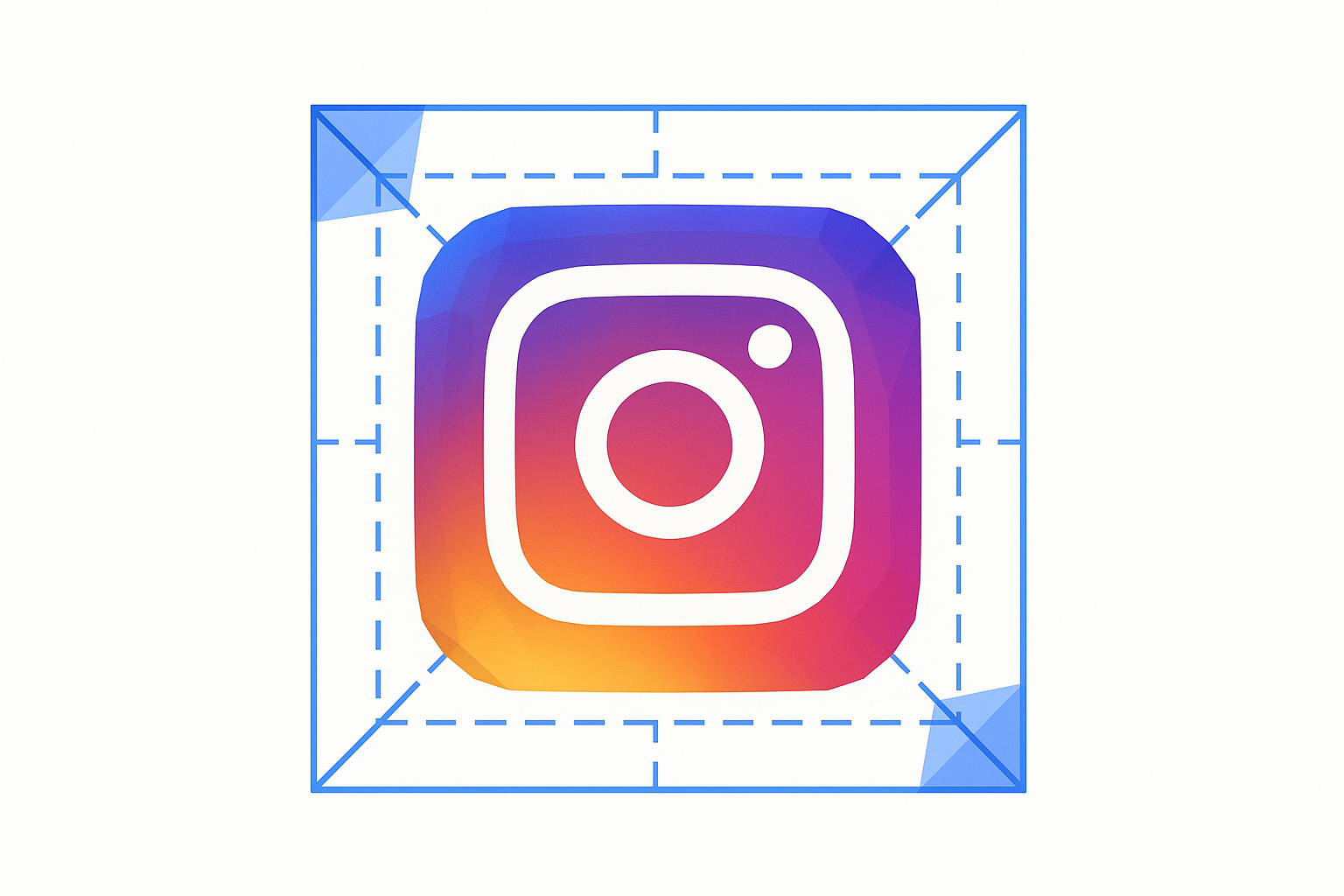
Always scale the asset proportionally so it stays crisp at every size. If you place the icon on a printed packaging insert, apply the same sizing rules you would use for a digital placement.
How to reference Instagram in text and ads
The instagram brand guidelines control more than just logo use. They also govern how you write the Instagram name in copy, whether that appears in a paid ad, a product description, or a storefront bio.
Using the name in ad copy
When you run ads that mention Instagram, you cannot imply that Meta endorses or sponsors your product. The following constructions are all prohibited under the guidelines:
- "As seen on Instagram"
- "Instagram's favorite phone case"
- "Officially endorsed by Instagram"
Never use Instagram's name in a way that suggests an official partnership or sponsorship with Meta.
Your copy must position Instagram as the platform where your content appears, not as a partner or endorser of your brand.
Writing Instagram in product descriptions
Product listings on Etsy, Shopify, or Amazon can reference Instagram as a channel you use, but the name must always appear as a standalone proper noun. You cannot abbreviate it to "IG," turn it into an adjective like "Instagrammable," or use it in possessive constructions that imply brand ownership.
When in doubt, ask yourself whether your phrasing suggests any kind of affiliation with Meta. If it does, rewrite the copy before publishing.
When you need approval and what to avoid
Most uses of the Instagram logo fall under the standard instagram brand guidelines without requiring separate approval. However, certain commercial applications demand explicit written permission from Meta before you publish. If you plan to use the Instagram name or logo in a product you sell, a mobile app, or any context that suggests an official relationship, you need to contact Meta directly through their brand resource center.
When in doubt, request approval before publishing rather than assuming standard usage rules cover your situation.
Common violations to avoid
Several specific mistakes come up repeatedly among POD sellers and e-commerce operators. Avoid all of these:
- Placing the Instagram logo inside a product design you sell
- Using the name or icon on packaging in a way that implies endorsement
- Combining the Instagram icon with your own logo into a single merged graphic
- Sourcing icon files from third-party stock sites instead of Meta's official resource center
These violations attract trademark complaints that can pull your active listings across every platform where you sell. Meta does not issue informal warnings before taking action, so reviewing your storefronts, ad creatives, and packaging against the official guidelines before you scale is the safest approach available to you.
Key takeaways
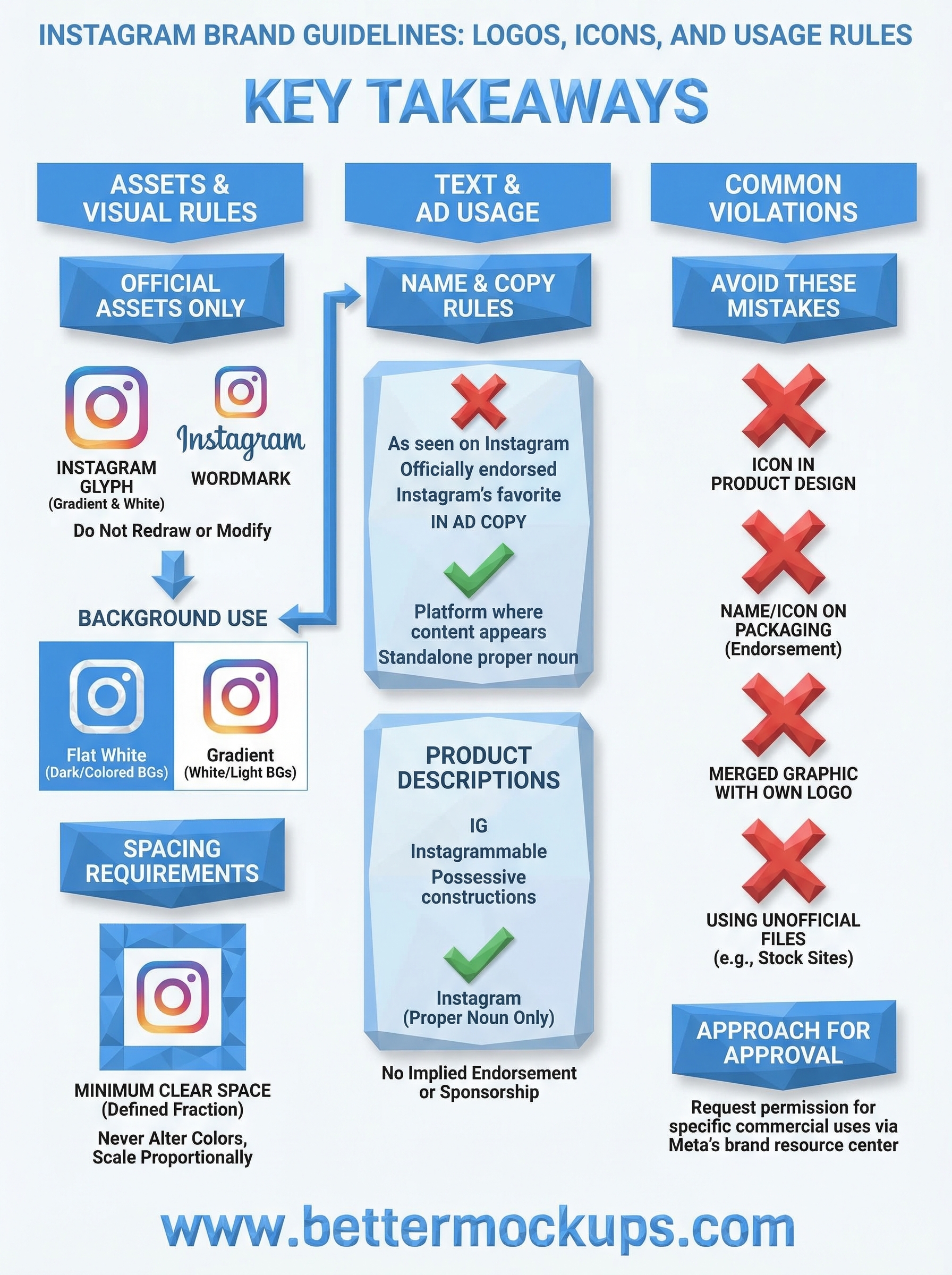
The instagram brand guidelines give you a clear, workable set of rules that protect your business when you use Instagram's logo, icon, or name in your marketing. Download all assets directly from Meta's brand resource center, apply the correct gradient or flat white version depending on your background, maintain required clear space, and never modify the files in any way. Keep your ad copy and product descriptions free of language that implies endorsement, and request written approval from Meta before any use that falls outside standard placement.
Every element of your seller presence sends a signal to buyers, from your listing photos to the icons in your storefront footer. Accurate, on-spec visuals build the kind of trust that turns browsers into buyers and first purchases into repeat orders. If you want that same accuracy applied to your phone case product images, explore production-matched mockup templates at BetterMockups and publish listings you can actually stand behind.


