

Spreadshirt print on demand is one of the longer-running platforms in the POD space, offering sellers a way to create and sell custom products without holding inventory. Whether you're evaluating it as your first fulfillment partner or comparing it against providers you already use, understanding how Spreadshirt actually operates, its fee structure, product catalog, and marketplace model, matters before you commit time building a storefront on it.
This guide breaks down how Spreadshirt works from signup to first sale, what it costs, and where it fits relative to other POD platforms. We'll cover the specifics that affect your daily operations: product quality, profit margins, and the platform's built-in marketplace versus driving your own traffic. If you're selling phone cases through Spreadshirt or any other provider, accurate product representation is where listings succeed or fail, and that's exactly what we build at Bettermockups, with mockups matched to real manufactured specs so your customers get what they see.
Let's get into the details.
What Spreadshirt print on demand is
Spreadshirt print on demand is a fulfillment model where Spreadshirt prints your design onto a product only after a customer places an order. You never buy inventory upfront, never pack a box, and never manage stock. Spreadshirt handles printing, packing, and shipping directly to your customer while you collect a margin on each sale.
The two sides of the platform
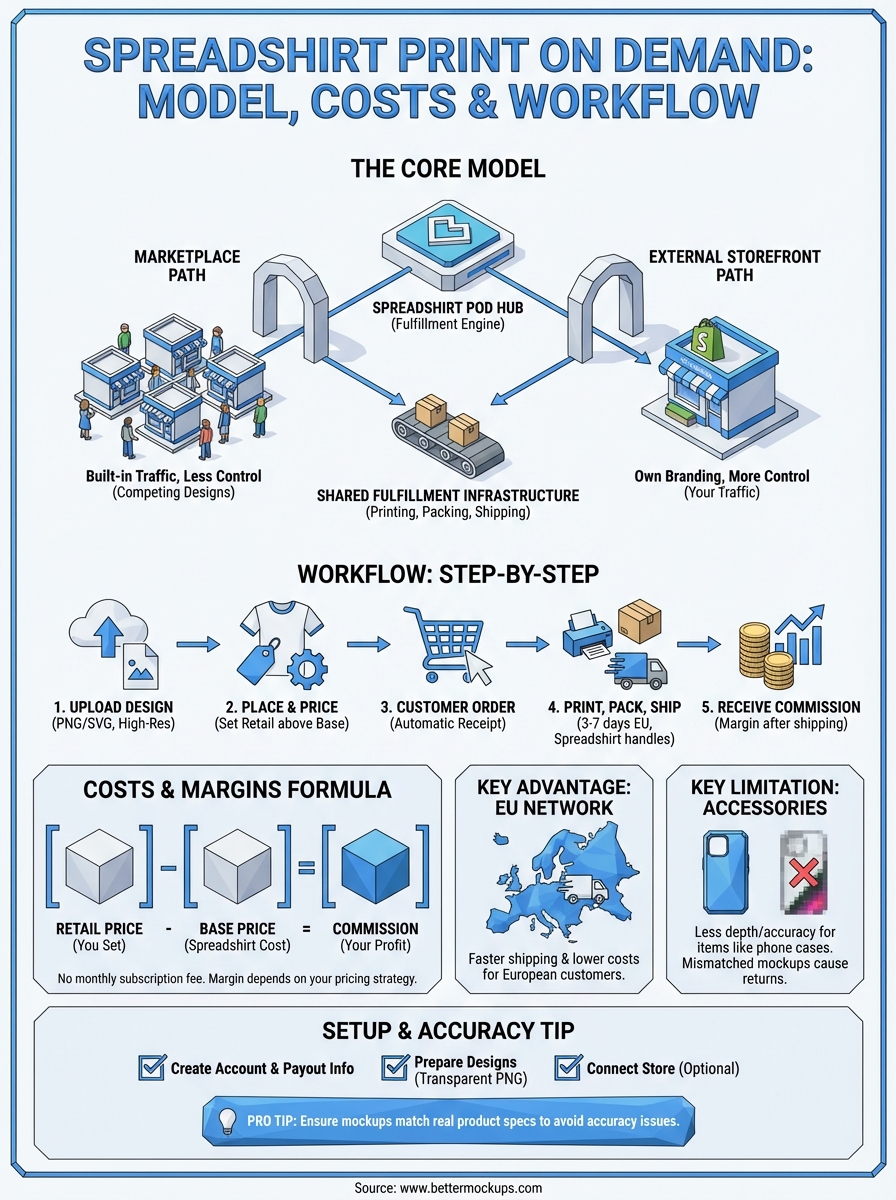
Spreadshirt operates as both a marketplace and a fulfillment engine, which makes it different from pure fulfillment providers like Printful or Printify. On one side, you can open a free shop directly on Spreadshirt's marketplace, where shoppers already browsing the site can find your products. On the other side, you can connect Spreadshirt to an external storefront, such as a Shopify or WooCommerce store, and use Spreadshirt purely as the production and shipping layer behind the scenes.
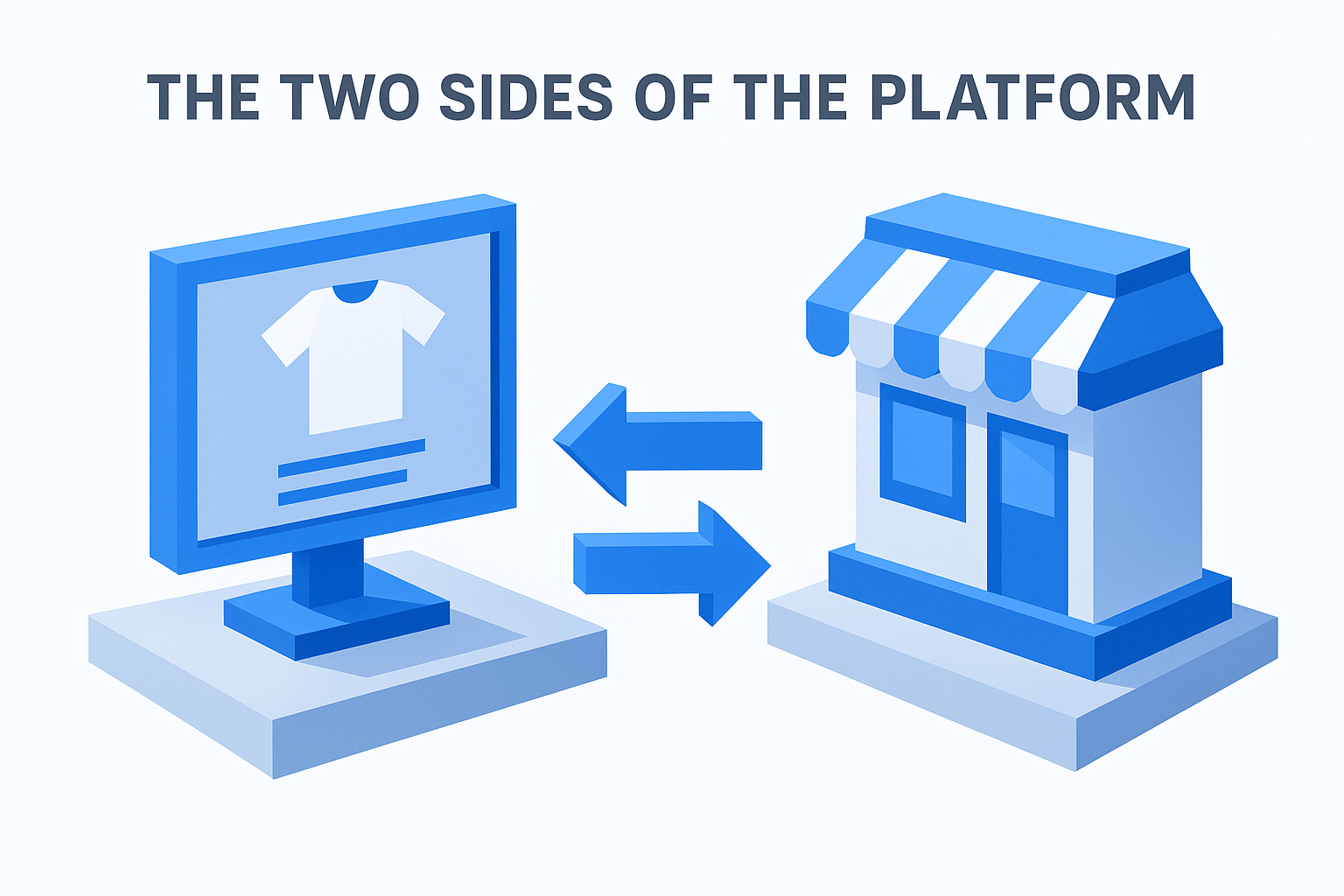
The marketplace option gives you built-in traffic, but it also means your products sit next to thousands of competing designs with no brand separation.
Both models use the same fulfillment infrastructure. The difference is where your customer discovers and purchases the product, and how much control you have over branding, pricing, and customer relationships.
What Spreadshirt actually produces
The platform focuses heavily on apparel, which is where it built its reputation. T-shirts, hoodies, and sweatshirts make up the core catalog, but Spreadshirt also offers accessories like tote bags, mugs, and phone cases. Product availability varies by region, and not every item in the catalog ships globally.
Each product in the catalog has a base price set by Spreadshirt, covering production and their margin. You set your retail price above that base, and the difference is your commission. The printing methods available include direct-to-garment, flex printing, and digital printing depending on the product type, and Spreadshirt selects the method based on what fits the item rather than giving you direct control over that choice.
Why sellers use Spreadshirt and when it fits
Spreadshirt attracts sellers who want zero upfront inventory risk and a straightforward path to their first sale. The platform's built-in marketplace means you can get products in front of buyers without running your own ads or building a brand audience from scratch. For sellers testing a new niche or expanding beyond their main store, Spreadshirt print on demand removes the friction of connecting a separate fulfillment provider.
Where Spreadshirt has a genuine advantage
The platform's European fulfillment network makes it a strong fit if a meaningful portion of your customers are based in Germany, the UK, or other parts of Europe. Shipping times and costs drop significantly when fulfillment happens closer to the customer, and that directly affects both conversion rates and post-purchase reviews.
If your target market skews European, Spreadshirt's production infrastructure gives you a real logistics edge that US-based providers struggle to match on delivery speed.
Where it starts to show limits
Spreadshirt works well for apparel-focused sellers, but if your catalog leans heavily toward accessories like phone cases, the product depth and manufacturing accuracy start to thin out. You get fewer model options, less control over print method, and no manufacturer-matched specifications built into the platform, which creates the exact gap between listing image and delivered product that drives refund requests and damages your store's review profile over time.
How Spreadshirt POD works step by step
The spreadshirt print on demand process follows a predictable sequence from design upload to fulfilled order. Understanding each stage helps you spot where errors enter the chain, particularly around product accuracy and listing quality, before they reach your customer.
Creating and uploading your design
You start by creating a free account and uploading your artwork through Spreadshirt's design tool. The platform accepts PNG and SVG files, with PNG being the more common choice for detailed designs. Once uploaded, you place your design on a product from the catalog, set your retail price above the base cost, and publish the listing to your Spreadshirt shop or export it to an external storefront.
The design placement step is where most accuracy problems begin, since the on-screen preview rarely reflects the actual print area, finish, or edge profile of the manufactured product.
From order to delivery
When a customer places an order, Spreadshirt's production team receives it automatically. They select the appropriate printing method for that product type, print it, pack it, and ship it directly to your customer under a delivery window that typically runs three to seven business days for standard orders within Europe and slightly longer for international shipments. You don't touch the order at any point in this process. Spreadshirt handles all fulfillment communication, and your margin gets calculated and recorded in your account after the order ships.
Costs, margins, and what you actually get paid
Spreadshirt print on demand uses a commission-based model rather than a flat markup system. Each product in the catalog carries a base price set by Spreadshirt, which covers production, packaging, and their cut. You set your retail price above that base, and the difference between the two is your commission per sale.
How Spreadshirt calculates your commission
Your earnings depend entirely on how aggressively you price above the base cost. A t-shirt with a base price of $12 priced at $22 gives you $10 per sale before any currency conversion fees or marketplace adjustments. Spreadshirt does not charge a monthly subscription fee for a basic account, so your only real cost is the margin you give up by pricing competitively.
Pricing too close to the base cost to win on marketplace search volume often leaves you earning less than $3 per sale after platform adjustments, which rarely justifies the volume needed to make it work.
What affects your actual take-home
Several factors compress your margin in practice. International orders may trigger currency conversion fees depending on your payout settings. Marketplace listings also compete on price visibility, which pushes many sellers toward lower retail prices. If you run an external storefront rather than the Spreadshirt marketplace, you keep more control over pricing, but you absorb your own traffic costs instead.
Setup guide for selling on Spreadshirt or your store
Getting started with spreadshirt print on demand takes less than an hour if you prepare your assets beforehand. Before you open an account, decide whether you want to sell directly on Spreadshirt's marketplace or connect it to an external store you already run, since that choice affects how you configure your shop settings from the start.
The biggest time sink in setup is not account creation but design preparation: high-resolution PNG files with transparent backgrounds and correct print dimensions will save you repeated uploads later.
Setting up your Spreadshirt account
Go to Spreadshirt's main site, create a free seller account, and fill in your payout details and tax information before you publish anything. Skipping this step upfront delays your first commission payment. Once your account is active, upload your designs through the design tool, place them on products, set your retail price above the base cost, and publish each listing.
Connecting to an external storefront
If you sell on Shopify or WooCommerce, Spreadshirt offers integration options that let you push your products directly to your existing storefront without rebuilding listings from scratch. You configure the connection inside your Spreadshirt account settings, map your products to the correct variants, and Spreadshirt handles all order fulfillment automatically once the integration is live. Test with one product before you push your full catalog to catch any pricing or variant mismatches early.
Next steps
You now have a complete picture of how spreadshirt print on demand works, from design upload through to commission payout. The platform suits sellers who want zero inventory risk, a straightforward setup, and a built-in European customer base. If those conditions match where your business is headed, setting up your account and testing with a small product batch is the logical next move.
One area worth addressing before you scale is listing accuracy. Every mockup image you publish sets a visual expectation your fulfillment partner then has to meet. When the camera cutout, finish, or edge profile in your mockup does not match the manufactured case, you absorb the cost in refunds and reviews. Getting that detail right is not complicated once you have the right templates.
If you sell phone cases and want mockups built to real manufacturer specifications, browse production-accurate phone case mockups at Bettermockups before your next product launch.


