

You’ve designed the perfect phone case, but here’s the problem: 75% of online shoppers make purchase decisions based purely on product images. Most tech accessory sellers mistakenly believe professional photography is their only option for compelling visuals, overlooking mockups as a powerful, cost-effective alternative. Mockups aren’t just placeholders or cheap shortcuts. They’re strategic digital marketing tools that bridge the gap between your product concept and customer imagination, delivering photorealistic presentations without expensive shoots or physical inventory. This guide reveals how to leverage mockups to increase conversions, build brand trust, and compete effectively in the crowded tech accessory marketplace.
Table of Contents
- Key takeaways
- Why mockups are critical in digital marketing for tech accessories
- How high-quality mockups drive conversions and build brand trust
- Best practices and workflows for creating effective mockups
- Balancing mockups with real photos: when and how to use each
- Enhance your digital marketing with Bettermockups
- FAQ
Key Takeaways
| Point | Details |
|---|---|
| Visuals drive conversions | High quality mockups can boost conversions by up to 30 percent for tech accessories by showing realistic product context and lighting. |
| Template library speeds launches | A library of mockup templates lets you introduce new designs in minutes instead of days and scales efficiently. |
| Brand trust through visuals | Professional, well lit product imagery conveys reliability and strengthens customer trust in your brand. |
| Consistency boosts professionalism | Using uniform mockups creates a cohesive storefront that signals quality and credibility to shoppers. |
Why mockups are critical in digital marketing for tech accessories
Mockups serve as lifelike visual representations essential for e-commerce sellers of tech accessories to showcase products without physical inventory. They create realistic product visuals that help customers envision how an iPhone case looks in daily use or how AirPods cases complement their lifestyle. This visualization capability is particularly valuable for print-on-demand sellers and dropshippers who never physically handle inventory.
The digital nature of tech accessory sales creates a unique challenge. Customers can’t touch or examine products before purchasing, making visual presentation your primary sales tool. Mockups bridge this gap by providing multiple angles, lifestyle contexts, and realistic lighting that communicate quality and desirability. They transform flat designs into tangible-looking products that customers can mentally place in their own lives.
Beyond basic product display, mockups eliminate the need for costly photoshoots every time you launch a new design. A single mockup template can showcase dozens of variations, saving thousands in photography expenses while maintaining consistent quality. This efficiency lets you test new designs quickly, respond to trends faster, and scale your product line without proportional increases in visual content costs.
Pro Tip: Create a library of mockup templates for your core products so you can launch new designs in minutes rather than days. This speed-to-market advantage can be decisive in trend-driven tech accessory niches.
Mockups also increase consumer confidence through clear, professional presentation. When customers see detailed, well-lit product images that show texture, fit, and context, they perceive your brand as established and trustworthy. This perception directly impacts conversion rates, as buyers feel more secure making purchases from sellers who invest in quality visuals. The psychological impact of professional imagery cannot be overstated in competitive marketplaces where dozens of similar products vie for attention.
“Quality mockups transform your digital storefront from amateur to professional, signaling to customers that you’re a serious seller worth trusting with their money.”
For more foundational information, explore why product mockups matter in building successful e-commerce brands.
How high-quality mockups drive conversions and build brand trust
The numbers tell a compelling story: 75% of shoppers base decisions on images, and high-quality mockups can boost conversions by up to 30% for tech accessories. This isn’t about superficial aesthetics. It’s about providing the visual information customers need to overcome purchase hesitation and click the buy button confidently.
Lifestyle mockups particularly excel at increasing desire and contextual understanding. When customers see your phone case on a device held by someone at a coffee shop, gym, or office, they immediately understand how the product fits into their own lifestyle. This contextual placement triggers emotional connections that simple white-background images cannot achieve. The difference between showing a case and showing a case being used is the difference between information and inspiration.
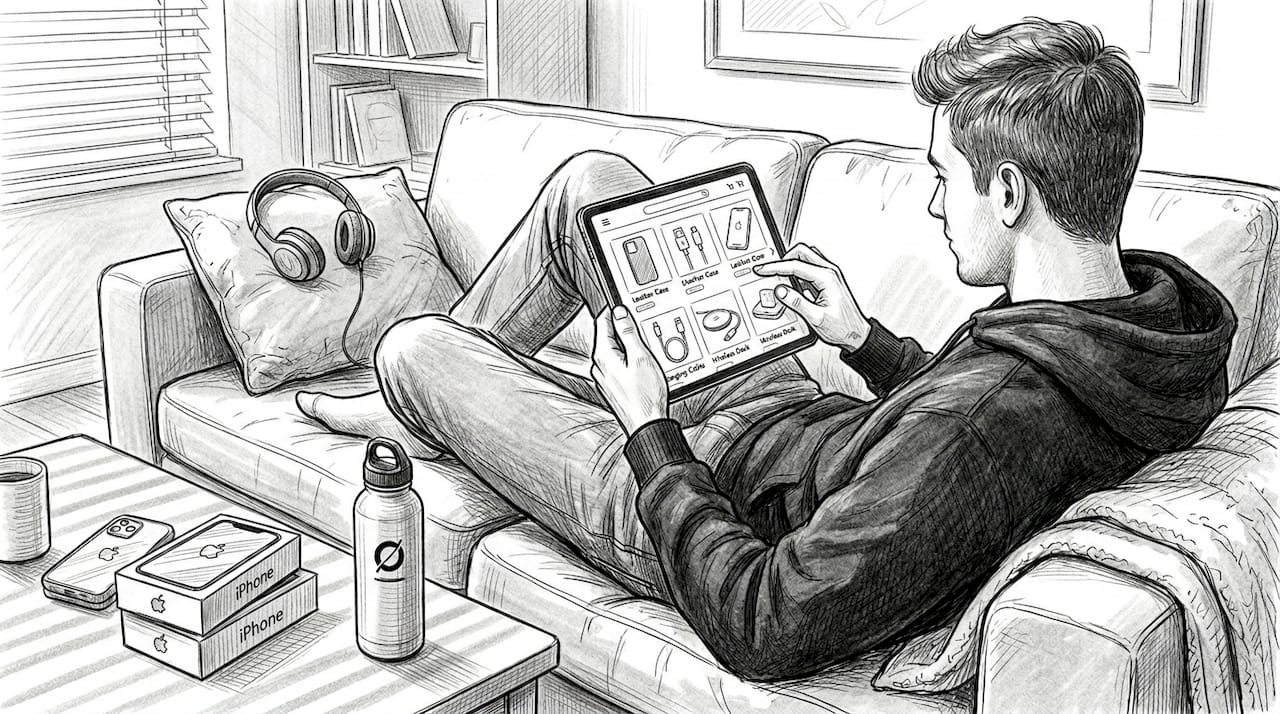
Trust builds through consistent, professional visuals across all customer touchpoints. When your mockup design strategy maintains uniform lighting, angles, and quality standards, customers perceive your brand as reliable and established. Inconsistent visuals, conversely, signal amateur operations and raise doubts about product quality and business legitimacy.
High-resolution mockups compete directly with professional photography for conversion power. Modern photorealistic mockup techniques produce images indistinguishable from studio shots, delivering the same trust-building benefits at a fraction of the cost. The key is resolution and attention to detail: shadows must fall naturally, reflections must be accurate, and textures must appear realistic under close examination.
Conversion impact by mockup quality:
- Low-resolution or poorly lit mockups: baseline conversion rates
- Professional static mockups: 15-20% conversion increase
- Lifestyle context mockups: 20-25% conversion increase
- Combined mockup types with video: 25-30% conversion increase
Mockups used across listings, social media, and advertising campaigns enhance brand presence and recognition. When customers see consistent visual quality from your Instagram posts to your product pages to your Facebook ads, they develop familiarity and trust. This omnichannel consistency is easier to maintain with mockups than photography, as you control every element digitally without coordinating multiple photoshoots.
“The most successful tech accessory brands use mockups strategically across every marketing channel, creating a cohesive visual identity that customers recognize and trust instantly.”
The psychological principle at work is simple: professional presentation signals professional products and service. Customers subconsciously assume that sellers who invest in quality visuals also invest in quality products, customer service, and reliable fulfillment. This halo effect from high-converting mockup design extends beyond individual purchases to build long-term brand equity.
Best practices and workflows for creating effective mockups
Creating compelling mockups follows a systematic workflow that ensures consistent quality and efficiency. Effective mockup workflows include selecting templates, customizing layers, adjusting lighting, and exporting; combining lifestyle, 3D, and video mockups yields best conversions.
Step-by-step mockup creation process:
- Select a template matching your product category and desired context
- Import your design into the smart object or designated layer
- Adjust lighting, shadows, and reflections for realism
- Customize background elements to match your brand aesthetic
- Export in appropriate formats and resolutions for each platform
- Test across devices to ensure mobile optimization
Popular mockup styles serve different marketing purposes. Lifestyle mockups show products in real-world contexts, helping customers envision daily use. 3D and photorealistic mockups provide detailed product views from multiple angles, addressing questions about appearance and quality. Video mockups demonstrate functionality and create dynamic social media content that stops scrollers mid-feed. Each format has distinct strengths, and combining mockup types strategically maximizes impact.
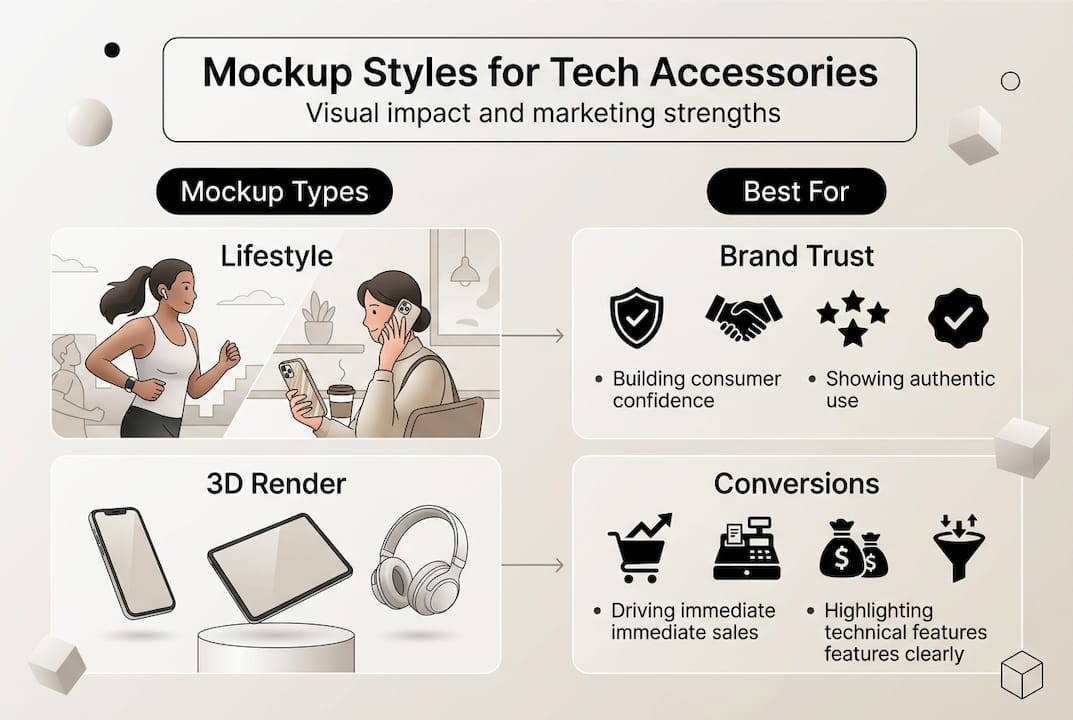
AI tools are revolutionizing mockup creation by reducing production time and costs dramatically. Modern AI-powered platforms can generate multiple mockup variations in minutes, automatically adjusting lighting and perspective while maintaining photorealistic quality. This technology democratizes professional visual content, letting small sellers compete visually with established brands without proportional budgets.
Pro Tip: Invest time upfront creating a mockup style guide for your brand. Document preferred lighting angles, background colors, and composition rules so every mockup maintains visual consistency even as you scale production.
Mobile optimization is non-negotiable in 2026, as most e-commerce traffic comes from smartphones. Mockups must render clearly on small screens, with key product details visible without zooming. Test every mockup on actual mobile devices before publishing, checking that text remains readable, product features are distinguishable, and loading times stay fast.
| Mockup Type | Best Use Case | Production Time | Conversion Impact |
|---|---|---|---|
| Lifestyle | Social media, ads | 15-30 minutes | High emotional appeal |
| 3D/Photorealistic | Product pages, listings | 20-40 minutes | High detail clarity |
| Video | Instagram, TikTok | 30-60 minutes | Highest engagement |
| Flat/Simple | Thumbnails, catalogs | 5-10 minutes | Moderate |
Consistency across your mockup library builds brand recognition and professionalism. Establish standard angles, lighting conditions, and background treatments that appear in all your product visuals. This consistency helps customers immediately identify your products in crowded marketplaces and reinforces your brand identity across touchpoints. Learn more about mockup template varieties to choose formats that align with your brand strategy.
Balancing mockups with real photos: when and how to use each
The mockups versus photography debate misses the point: the most effective strategy uses both strategically. Hybrid approaches using 70% mockups, 20% real photos, and 10% behind-the-scenes content yield the best results, as mockups are cost-effective but real photos add authenticity, especially for premium products.
Mockups offer unmatched flexibility and cost savings. You can create unlimited variations without additional photoshoots, test new designs instantly, and maintain perfect consistency across your entire catalog. They’re ideal for showcasing design variations, seasonal collections, and trend-responsive products where speed matters more than tactile authenticity. The cost per image drops dramatically as you scale, making mockups the foundation of efficient visual content strategies.
Real photography provides authenticity and material detail that even the best mockups struggle to replicate perfectly. Premium leather textures, metallic finishes, and intricate embossing show more convincingly in actual photos. When selling high-end products where material quality justifies premium pricing, real photos validate those quality claims in ways mockups cannot quite match. Customers shopping at higher price points expect and respond to authentic photography.
Mockups vs. real photos comparison:
| Factor | Mockups | Real Photos |
|---|---|---|
| Cost per image | Low, decreases with scale | High, fixed per shoot |
| Production speed | Minutes to hours | Days to weeks |
| Consistency | Perfect across variations | Variable lighting/conditions |
| Material authenticity | Good to excellent | Excellent |
| Flexibility for edits | Unlimited, instant | Requires reshoots |
| Customer trust | High with quality execution | Highest for premium products |
Edge cases where real photos become necessary include showcasing fine material textures like genuine leather grain, demonstrating actual product thickness and weight, and proving authenticity for luxury-positioned items. If your competitive advantage is material quality rather than design creativity, photography should comprise a larger portion of your visual strategy. Similarly, if customers frequently question product authenticity in reviews, real photos can address those concerns preemptively.
A hybrid strategy delivers professional, trustworthy product visuals while maintaining cost efficiency. Use mockups for your primary product images, design variations, and social media content. Reserve real photography for hero images on key products, material detail shots, and lifestyle contexts that require genuine human interaction. This approach maximizes the strengths of each format while minimizing weaknesses and costs.
Pro Tip: Use A/B testing to optimize your mockup-to-photo ratio for your specific audience and products. Track conversion rates, return rates, and customer questions to identify which visual approaches work best for your brand. Some audiences respond better to polished mockups, while others trust authentic photos more.
The decision ultimately depends on your product positioning, target market, and competitive landscape. AI-generated mockups versus photorealistic renders continue improving, narrowing the authenticity gap. As technology advances, the practical differences diminish, making strategic deployment rather than format choice the key success factor. Focus on delivering the visual information your specific customers need to make confident purchase decisions, whether that comes from mockups, photos, or strategic combinations of both.
Enhance your digital marketing with Bettermockups
Ready to implement these mockup strategies for your tech accessory business? Bettermockups provides everything you need to create professional product visuals that drive conversions. Our extensive mockup collections are specifically curated for tech accessories, including phone cases, AirPods cases, and other popular gadgets. Each template is designed for easy customization, letting you produce photorealistic product images in minutes rather than days.
Explore our video mockup collection to create dynamic social media content that stops scrollers and drives engagement. Stay ahead of design trends with our newest mockup releases, updated regularly to reflect current visual marketing best practices. Not sure where to start? Our detailed mockup usage guide walks you through the entire process, from template selection to final export, ensuring you get professional results even if you’re new to mockup creation.
FAQ
What types of mockups work best for tech accessories?
Lifestyle, 3D photorealistic, and video mockups combined deliver the strongest conversion results for tech accessories. Lifestyle mockups show products in real-world contexts that help customers envision daily use, while 3D mockups provide detailed views from multiple angles. Video mockups create engaging social media content with the highest engagement rates. The most successful sellers use all three types strategically across different marketing channels rather than relying on a single format. AI tools now make creating multiple mockup types cost-effective and fast, removing previous barriers to comprehensive visual strategies. Learn more about optimizing mockup design for maximum impact.
How do mockups affect online buyer trust and sales?
High-quality mockups build trust and increase conversions by up to 30% for tech accessory sellers. Since 75% of shoppers rely on product images for buying decisions, professional mockups directly influence purchase behavior by providing the visual information customers need to feel confident. Mockups signal brand professionalism and product quality, creating a halo effect that extends beyond individual purchases to build long-term brand equity. Consistent mockup quality across all touchpoints reinforces reliability and establishes your brand as trustworthy in competitive marketplaces. The key is maintaining high resolution, realistic lighting, and attention to detail that matches or exceeds traditional photography standards. Discover how photorealistic mockups drive sales in competitive markets.
When should I use real photos instead of mockups?
Real photos work best for showcasing fine material details, demonstrating product thickness and weight, and validating premium product claims. If your competitive advantage is material quality like genuine leather texture or metallic finishes, photography captures those details more convincingly than mockups. Premium-positioned products benefit from authentic photography because higher-priced items require stronger proof of quality to justify their cost. A hybrid approach combining 70% mockups with 20% real photos and 10% behind-the-scenes content often yields optimal results, maximizing cost efficiency while maintaining authenticity where it matters most. Use A/B testing to determine the right balance for your specific audience and product line. Explore comprehensive mockup strategies that incorporate both formats effectively.
How quickly can I create professional mockups?
With proper templates and workflows, you can create professional mockups in 5 to 60 minutes depending on complexity. Simple flat mockups for thumbnails take 5 to 10 minutes, lifestyle mockups require 15 to 30 minutes, and detailed 3D mockups need 20 to 40 minutes. Video mockups are most time-intensive at 30 to 60 minutes but deliver the highest engagement rates. AI-powered tools are dramatically reducing these timelines, with some platforms generating multiple mockup variations in minutes. The key is investing time upfront to create reusable templates and establishing a consistent workflow. Once you’ve built a mockup library for your core products, launching new designs becomes nearly instantaneous, giving you a significant speed-to-market advantage in trend-driven niches.


